
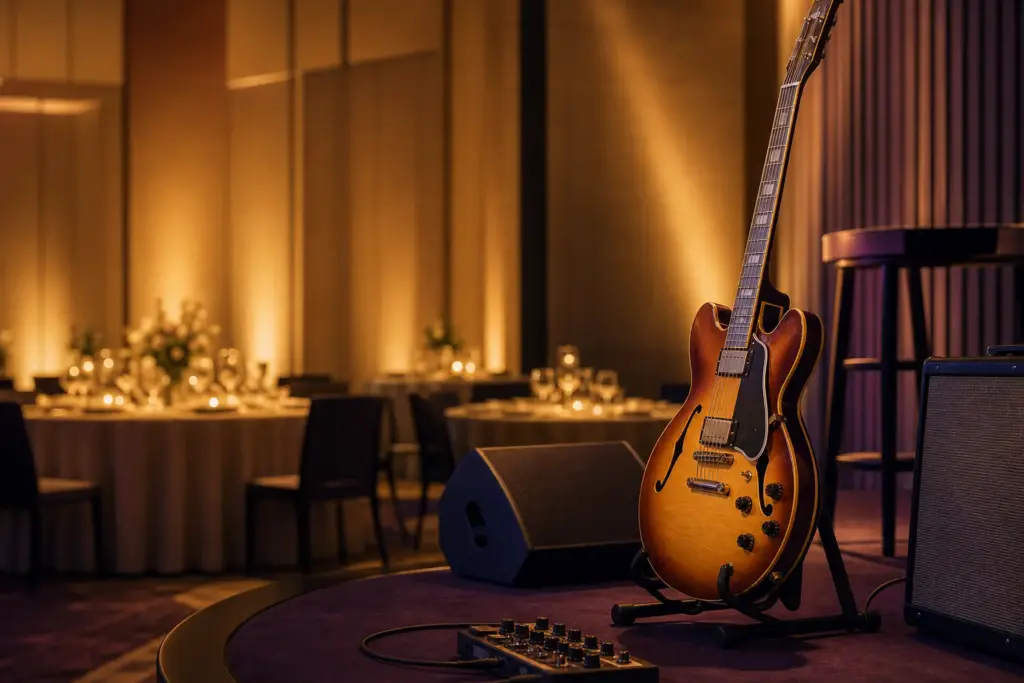
There is a moment at every corporate event when the program ends and the room either comes alive or quietly deflates. Choosing entertainment for corporate events is the decision that shapes which of those two things happens. Corporate event entertainment is the planned live or recorded performance element that sets the emotional tone and sustains energy. It gives attendees a reason to stay and connect. Get it right, and the event feels worth attending. Get it wrong, and even a generous catering budget cannot save the evening.
Key Takeaways
- Choosing entertainment for corporate events should begin with a clear understanding of your audience’s expectations and the event’s core purpose before any performer is booked.
- Live music creates an atmosphere that pre-recorded playlists cannot replicate, making it one of the most effective options for dinners and milestone celebrations.
- Budget planning for corporate event entertainment should account for performer fees and travel expenses. Sound equipment needs a separate line item. Any custom composition requirements should be budgeted independently as well.
- Matching the entertainment format to the event format is the single most important practical decision a planner makes. Acoustic works for networking dinners, while higher-energy acts suit celebrations.
- Booking at least 8 to 12 weeks in advance protects your preferred date and gives performers enough time to prepare material tailored to your event.
By the end of this guide, you will know how to match entertainment to your audience and event goals. You will also learn how to plan a realistic budget and how to work with performers so the experience lands the way you intend.
Understanding Your Audience Before You Book Any Corporate Performers
Every good entertainment decision starts with a single question: who is actually in the room? An executive leadership retreat and a company-wide holiday party call for completely different approaches, even if the guest count is the same. Age and professional background shape what people find comfortable. Cultural expectations determine what they find genuinely enjoyable.
Consider the mix of people who will attend. A team where the average age sits in the mid-thirties will likely respond differently to live music choices than a mixed group spanning early-career staff and senior leadership. Neither is better — they are just different audiences that need different thinking.
Ask yourself what your guests do in their own time. Are they likely to appreciate a sophisticated acoustic performance during dinner, or would they be happier on a dance floor? You do not need to survey the entire guest list to get a reasonable answer. Department heads and team managers usually know their people well enough to give you honest guidance.
One question worth asking early: does your audience come to corporate events expecting to be passive observers, or do they want to be drawn in and participate? The answer changes everything from performer style to room layout. Reach people through entertainment that feels right for them specifically, not for a generic corporate crowd.
Cultural and professional context matters too. A group of creative professionals at an agency may welcome something unconventional. A compliance team or a group of senior partners at a law firm may prefer something more measured. Neither group is wrong — they simply need a planner who pays attention before making assumptions.
Defining Your Event Goals and the Role Entertainment Plays
Entertainment is not decoration. It should connect directly to what you are trying to achieve with the event, and that means knowing your goals before you start contacting performers. Whether the aim is team cohesion or celebrating a company milestone, the entertainment should serve that purpose. If you are hosting clients in a way that reflects your values, the performance must align with that intention rather than sit beside it.
Think about where in the event flow entertainment belongs. Is it a backdrop during a networking reception, a centerpiece of a gala dinner, or a closing act that sends people home with energy? Each position in the agenda calls for a different kind of performance and a different energy level.
When Entertainment Should Fade into the Background
For working dinners and client receptions, entertainment should hold the atmosphere without competing for attention. This applies to any event where conversation is the main activity. Acoustic live music does this well. A solo guitarist or a small ensemble keeps the room feeling alive and considered, while leaving space for the real work of the event — people talking to each other.
Not because background music is unimportant, but because its job is to support what is already happening rather than redirect it. Choosing a performer who understands this distinction is as important as choosing the right style of music.
When Entertainment Should Take Center Stage
Company anniversary celebrations and year-end parties often call for entertainment that people actually watch and respond to. Product launch events fall into this category as well. Here, a performer’s stage presence and ability to read the room become the deciding factors. The entertainment is the experience, and the planning should treat it that way from the start.
Knowing which of these two roles your entertainment needs to fill before you contact a single performer will save you time and money. It also prevents the frustrating experience of a mismatched booking.
Choosing Entertainment for Corporate Events: Formats That Actually Work
When it comes to selecting live performers and acts for a corporate setting, the options are wider than most planners initially consider. The format you choose should follow directly from your audience profile and event goals, not from what seemed to work at someone else’s event last year.
| Entertainment Format | Best Suited For | Key Consideration |
|---|---|---|
| Solo acoustic musician | Networking dinners, client receptions | Warm atmosphere without overpowering conversation |
| Cover band or party band | Celebrations, year-end parties | High energy; needs a dance floor and sound system |
| Corporate DJ or MC | Events with tight timelines or diverse crowds | Genre flexibility and crowd-reading skill are essential |
| Motivational speaker-performer | Conferences, leadership retreats | Combines inspiration with live performance elements |
| Custom live composition | Milestone events, award evenings | Personal and specific; requires advance briefing |
Live bands bring presence and energy that a playlist simply cannot match. A good corporate band knows how to read a room of professionals and adjust accordingly, pulling back during speeches and lifting the energy when the floor is open.
DJs offer flexibility, particularly when your guest list spans different musical tastes. A skilled DJ can move between genres on the fly, which makes this format well-suited to diverse teams. The trade-off is that a DJ rarely creates the same sense of warmth and human connection that a live performer does.
Motivational speakers who weave performance into their presentation can be a powerful choice for conferences. Think of an illusionist with a message about problem-solving, or a musician who builds a story around a live composition. These work especially well when the line between content and entertainment needs to stay blurred.
Why Live Music Stands Apart from Other Corporate Event Options
Live music adds something to a room that no other format replicates. It is immediate and honest — there are no second takes, no perfectly produced tracks hiding behind a performance. That authenticity is exactly what makes it land differently with an audience of professionals who have sat through many polished presentations.
I have been performing live music at concerts and private events for more than 15 years, and the thing I notice consistently is how quickly a room shifts when a live instrument enters the space. It changes the energy in a way that is hard to manufacture through other means. People slow down and listen. They connect with the person next to them because they are sharing something real.
For corporate events specifically, that sense of shared experience is valuable. When guests feel they witnessed something rather than just attended something, the event becomes a point of reference. It becomes a moment people mention when they talk about the company’s culture or how the leadership treats its people.
Acoustic Performances for Intimate Corporate Settings
For upscale networking dinners and cocktail receptions, an acoustic performance creates an elevated atmosphere without demanding the audience’s full attention. A solo guitarist or a duo works beautifully in spaces where conversation is the primary goal. A small chamber ensemble achieves the same effect with added richness.
According to SUISA, the Swiss music rights society, live music at private events is subject to specific licensing requirements — a detail worth confirming early in your planning process so there are no surprises on the day.
Higher-Energy Live Acts for Celebrations
Company milestones and holiday parties call for performers who can lift the room and keep the energy sustained over the course of an evening. Cover bands and party bands with a genuine repertoire of crowd-familiar material do this well. The key is finding musicians who have specific experience with corporate audiences — professionals who know that a corporate crowd responds differently than a festival audience.
Budget Planning for Corporate Event Entertainment
Budget is the constraint that shapes every other decision, and it is worth being honest about it early. Corporate event entertainment costs vary enormously depending on performer experience and group size. Travel distance and technical requirements like sound equipment or staging add further variables.
A solo acoustic performer is almost always the most cost-effective route to genuine live music. A full cover band with sound engineers and equipment can cost several times more — not because one is better, but because the logistics are more complex. Knowing what you actually need saves money without compromising quality.
What the Budget Needs to Cover
Beyond the performer’s fee, a realistic entertainment budget should account for sound equipment and technical setup. Travel and accommodation matter if the performer is coming from outside your city. Do not forget licensing costs for public performance of music.
If you want a custom song or a custom composition written specifically for your event, build that into the brief and the budget from the start. Custom material takes preparation time and should not be treated as an add-on to a standard booking.
Balancing Quality and Cost
The most expensive option is not always the right one for your event. A polished solo performer who genuinely understands your audience can create a stronger impression than a headline act who is technically impressive but disconnected from the room.
Think of the entertainment budget not as a line item to minimize, but as an investment in how the event feels. The program content and the catering are forgotten faster than the way the room felt at the end of the night. The venue matters, but the emotional resonance matters more.
Logistics, Timing, and Working with Performers
Even the best performer needs the right conditions to deliver their best work. Logistics planning is where many corporate event entertainments fall short — not because of a bad choice, but because the practical details were handled too late or too loosely.
Sound is the most common failure point. A performer who sounds extraordinary in a rehearsal space can sound muddy or thin in a hotel ballroom with poor acoustics and no dedicated sound engineer. Always ask your performer what their technical requirements are, and confirm that the venue can meet them before you finalize the booking.
Scheduling Entertainment Within the Event Flow
Timing is everything. Live music during a welcome reception lands differently than live music played over the sound of clinking cutlery during a three-course dinner. Guests trying to have conversations need space to do so. Map out the event timeline and identify specifically where the entertainment sits, how long it runs, and what happens immediately before and after.
Build buffer time around the performance for setup and sound check. Allow additional time for the transition back to the rest of the program. A performer who rushes a sound check delivers a weaker performance. That rushed quality reaches people in the room even if they cannot name the reason.
Communication Before the Event
Give your performer as much context as possible before the event. Share the guest profile and the event purpose. Include the venue layout and the program schedule. A performer who knows they are playing for 80 senior executives at a company anniversary dinner will prepare differently than one who assumes a generic corporate crowd.
That preparation is what separates a performance that feels right from one that feels slightly off. Honest, detailed briefing is one of the simplest things a planner can do to improve the outcome.
Custom Songs and Personalized Touches That Reach People
A custom composition written specifically for a company event is one of the most distinctive choices available to a corporate planner. Not because it is the loudest or the most expensive option, but because it is the most specific. A song that tells the company’s story or references a shared milestone reaches people in a way that a cover of a familiar hit simply cannot. Music reflecting the values of the team creates an emotional connection that generic playlists never achieve.
I have found, across more than 15 years of performing at private events, that custom material consistently creates the strongest response from audiences. There is something about hearing your own story reflected back through music that lands differently. It does not need to be elaborate — a single verse and chorus built around a genuine moment in the company’s history can be enough.
You can hear examples of this kind of original, honest live performance on Martin Schlögl on Spotify and Martin Schlögl on Bandcamp, where the approach to live, authentic music performance is documented across multiple releases.
How to Brief a Performer for a Custom Song
If you want a custom composition for your event, start the conversation early — ideally at least six weeks before the event date. Share the company’s background and the occasion being celebrated. Include any specific moments or people you want the song to reflect, along with any values that should come through.
Be honest about what you want the song to do. Is it meant to open the evening with warmth? To mark an award ceremony? To close the event on an emotional note? The more clearly you can describe the function of the piece, the more precisely the performer can write something that serves it. For detailed guidance, see how a custom song is written.
A Practical Checklist for Booking Corporate Event Performers
When the planning conversations are done and you are ready to commit to a booking, a clear checklist keeps the process honest and prevents the small details from slipping through. The following steps apply whether you are booking a solo musician or a larger live act.
Start with clarity on your non-negotiables: date and venue must be confirmed. Budget ceiling and the role the entertainment plays in the event need equal certainty. Without those four things confirmed, any conversation with a performer is premature.
Before You Sign the Contract
Confirm the performer’s exact fee and what it includes. Ask specifically whether travel and accommodation are covered in the quoted price. Clarify whether sound equipment and setup time are billed separately. Get this in writing before you agree to anything.
Ask for references or evidence of previous corporate event experience. A performer who regularly plays weddings may be technically skilled but lack the specific instincts needed for a professional audience. Corporate crowds respond differently, and experience in that environment matters.
Review the cancellation policy carefully on both sides. Life happens — your company may need to postpone, or a performer may face an emergency. Clear terms protect both parties.
After the Contract Is Signed
Send a detailed event brief to the performer within one week of signing. Include the full program schedule and the venue address with contact information. Add the technical setup available along with a profile of the expected guest list.
Schedule a check-in call approximately two to three weeks before the event. Use it to confirm logistics and discuss any changes to the program. Give the performer a chance to ask questions. A brief, well-organized check-in prevents the kind of last-minute surprises that reach people in the room as tension rather than energy.
On the day itself, designate one person as the performer’s point of contact. That person handles sound check timing and answers questions about the space. They also communicate any program changes. A single clear contact removes ambiguity and lets the performer focus on doing their best work.
Frequently Asked Questions
How far in advance should I book entertainment for a corporate event?
For most corporate events, booking entertainment at least 8 to 12 weeks in advance is a good rule of thumb. Popular performers and live music acts can fill their calendars quickly, especially around holiday seasons. Booking early also gives you time to discuss custom song requests or specific set requirements with the performer.
What type of entertainment works best for a corporate dinner?
Acoustic live music is widely considered the strongest choice for corporate dinners. It creates atmosphere without overpowering conversation, which is exactly what a seated dinner needs. A solo guitarist or small ensemble can hold the room’s attention at key moments while staying in the background during networking time.
How do I know if my budget is realistic for corporate event entertainment?
Start by contacting a few performers or entertainment agencies with your date and location. Share your event size as well. Most will share their rates upfront. Live music acts vary widely in price depending on group size and travel. Experience level also affects pricing. A solo performer is almost always more affordable than a full band, and many offer the same atmosphere at a fraction of the cost.
Can a live musician perform a custom song for our company event?
Yes. Many experienced live performers offer custom compositions tailored to a company’s story or milestone being celebrated. They can also reflect specific values. A custom song written for the occasion can add a personal and meaningful dimension that generic playlist music simply cannot match.
Is live music always better than a DJ for corporate events?
Not always — it depends on the event format. Live music brings warmth and a sense of presence that recorded music cannot replicate. But a skilled DJ offers flexibility and a wider range of genres on the fly. DJs can also suit events with a dance floor or tighter logistics. The best choice is the one that fits your audience and the mood you want to create.
If you are planning a corporate event and want to talk through what live music could do for it, I invite you to visit martinschloegl.ch and get in touch — or if you’re looking for guidance on hiring a songwriter for events that guests will never forget, let’s find the right fit for your event together.