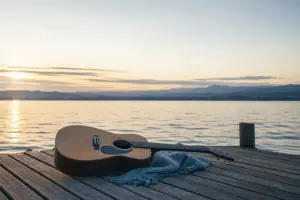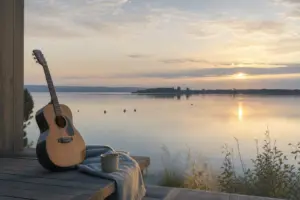
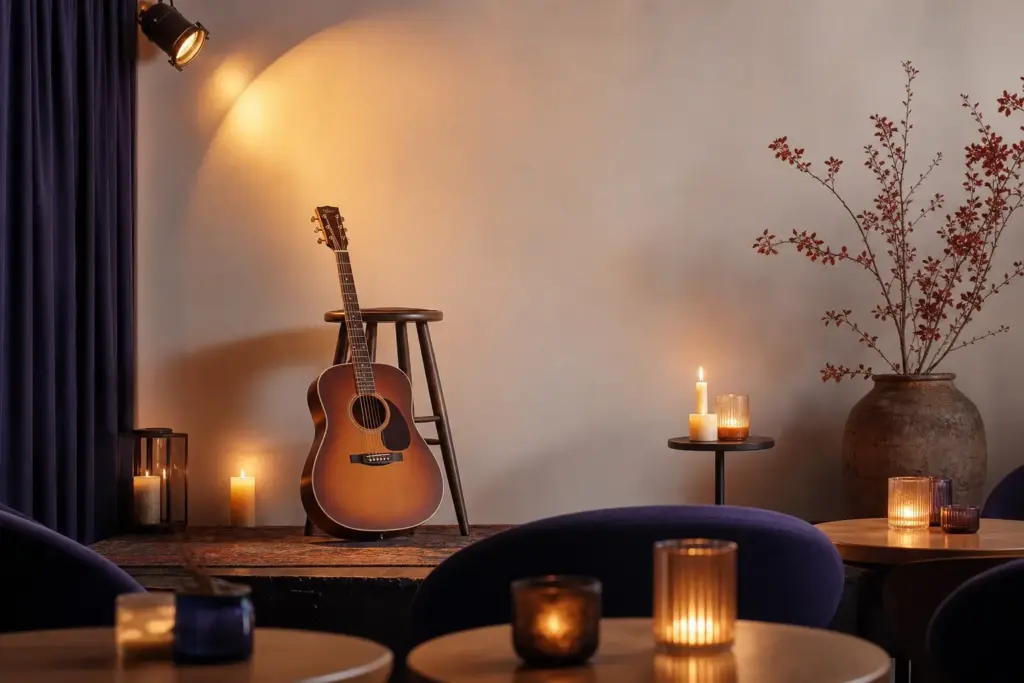
Picture someone walking into a venue with nothing but an instrument and a handful of songs they wrote themselves. That, in its simplest form, is what a modern troubadour is. A modern troubadour is a solo singer-songwriter who composes their own material and performs it live, often without the support of a band or a label. The tradition stretches back to the lyric poets of 12th-century Occitania, and it has never actually stopped.
Key Takeaways
- A modern troubadour is a solo artist who writes and performs their own songs, continuing a tradition that began in medieval southern France.
- The word troubadour comes from the Occitan verb trobar, meaning to explore and to invent. The role has always involved traveling and self-reliance.
- Today’s modern troubadours face a real tension between the low cost of recording at home and the difficulty of earning a living wage from streaming revenue alone.
- Live performance remains the financial backbone of most working troubadours, making direct audience connection more important than ever.
- The modern troubadour tradition includes artists from Woody Guthrie and Paul McCartney to Ed Sheeran, showing how wide and durable the form really is.
This article walks through the history and economics of the modern troubadour. It also examines the daily reality, so you can understand why the form has lasted this long and what it actually takes to live it.
What Defines a Modern Troubadour
A modern troubadour is, at its core, a solo artist who writes their own songs and performs them in person for real audiences. The definition sounds simple. The reality is considerably more demanding.
What separates the modern troubadour from a cover artist or a session musician is authorship. The songs belong to the performer. They were written in bedrooms and in kitchens. Late-night cafés served as writing spaces too. They carry the fingerprints of a specific person’s experience. That specificity is the whole point.
There is also the question of self-reliance. Most working troubadours handle their own booking and promotion. They also manage their own travel and sound. They might loop a guitar part or layer a vocal harmony, but the performance is essentially theirs alone. No drummer to hide behind. No producer smoothing the rough edges before the audience hears them.
The modern troubadour is also, almost by definition, a traveler. The 12th-century originals went from court to court. Today’s equivalent goes from venue to venue, sometimes walking in cold and asking if they can play. Some troubadours work a tight local circuit. Others genuinely move from town to town, living out of a bag and a guitar case, exactly as their medieval predecessors did.
What ties all of these working definitions together is presence. The modern troubadour’s product is not a recording. It is the live experience of one person telling the truth through a song in a room with other people. Everything else is secondary to that moment.
Roots of the Troubadour Tradition
The troubadour tradition began in western Aquitaine around the 11th century. It spread rapidly through southern France and northern Italy, eventually reaching the Iberian Peninsula. These were composer-performers of Old Occitan lyric poetry, and their major themes were courtly love and social observation. They were not simply entertainers. They were cultural commentators with a court audience and, often, a sharp political edge.
The word itself comes from the Occitan verb trobar, which carries the meanings of exploring and inventing. It also suggests disturbing. That last meaning is easy to overlook, and it probably shouldn’t be. The original troubadour was not a passive ornament at a banquet. They were someone who poked at the establishment from within it, using melody and verse as a kind of license.
Female troubadours existed too. They were called trobairitz, and they composed in the same tradition, though history has preserved far fewer of their names. That erasure is worth noting, because it shaped which version of the troubadour we inherited.
The tradition had spread into Catalonia and Portugal by the early 13th century. It had spawned distinct regional schools with different aesthetic commitments. Some favored dense, allusive poetry known as trobar clus. Others worked in a plainer, more direct style. That tension between the opaque and the direct is still alive in songwriting today, even if nobody uses those terms anymore.
By the 14th century, the original troubadour movement had faded. But the figure of the traveling poet-musician did not disappear. It simply changed costume, moved into new contexts, and kept going.
The Folk Revival and the Modern Troubadour
The word troubadour in its modern sense was largely shaped by the folk revival of the 20th century. Woody Guthrie, emerging from the hardship of the 1930s Dust Bowl, embodied the archetype so completely that everything that followed was measured against him. He traveled and wrote his own songs. He performed alone with a guitar, and his material was directly tied to the political and social conditions around him. That is a troubadour by any reasonable definition.
The 1950s folk revivalists picked up that imagery consciously. They saw in the troubadour figure a kind of moral authority that the mainstream pop industry couldn’t offer. The performer who owns their material and delivers it unadorned carries a different kind of credibility than someone performing someone else’s song in front of a hired band.
Bob Dylan extended and complicated the tradition in the 1960s. He brought surrealism and literary ambition into a form that had been largely documentary. That move opened the door for generations of singer-songwriters who understood that the modern troubadour didn’t have to be only a witness. They could be a poet too.
Paul McCartney’s self-titled 1970 debut, recorded largely alone at home, is another useful marker. He played nearly every instrument himself, not for stylistic reasons but out of practical necessity. The result was raw and domestic and entirely his. That record made a kind of argument: the modern troubadour doesn’t need a studio full of people. They need the songs and the willingness to be heard.
What the folk revival really did was give the modern troubadour a mythology to inhabit. Mythology, it turns out, is a durable thing.
Life on the Road as a Modern Troubadour
The day-to-day life of a working modern troubadour is considerably less romantic than the mythology suggests. The reality is early mornings and late drives. A lot of time goes to email.
Booking is constant work. A solo musician looking to play regularly needs to identify venues and make contact. They must negotiate fees and confirm dates, then follow up when venues go quiet. Some working troubadours describe walking into bars and restaurants and asking outright if they can play, exactly as musicians did a thousand years ago. The technological wrapper around that conversation has changed. The conversation itself hasn’t.
Travel is the other defining feature. Some modern troubadours work a tight regional circuit, building up a loyal local following over years. Others move more broadly, treating whole countries as their territory. The solo format makes this feasible in a way that a full band setup simply isn’t. One person, one instrument, one case. The logistics are hard, but they are manageable.
Sound is its own constant negotiation. Many solo musicians bring their own small PA system, which gives them independence from whatever the venue can offer. Others work acoustically in smaller spaces. The best ones can read a room quickly and adjust their volume and approach before the first song is over.
For a solo musician working the live circuit around Lake Constance, for instance, the regional geography creates both opportunity and limit. A modest area can support a working musician who cultivates it carefully over time. If you’re curious about what that circuit looks like in practice, the solo musician Lake Constance page gives a concrete sense of how that territory can be worked.
The life is precarious. It is also, for people who have chosen it, the only life that makes real sense.
The Economics of Being a Modern Troubadour
Money is the subject that most writing about the modern troubadour skirts around. It deserves a direct look.
The basic income model for a working troubadour has always been live performance. A night at a venue, a fee from a private event, a wedding or corporate booking that pays significantly better than a bar gig: these are the financial pillars. Everything else sits on top of them. Streaming revenue and merchandise bring modest amounts for most working musicians. Licensing adds a bit more.
Streaming has created a real problem for solo musicians. The per-stream rates offered by major platforms are very low, and solo artists without label support receive none of the advances or marketing spend that might offset those rates. According to IFPI’s Global Music Report, streaming now accounts for the majority of recorded music revenue globally, but that revenue concentrates heavily at the top of the chart. For the working modern troubadour in the middle, streaming income rarely covers a month’s rent.
Private events are where many solo musicians find the most reliable income. A wedding or a corporate dinner pays better than venues. Birthday celebrations offer similar rates. These engagements often require a single set of well-chosen material rather than three hours of originals. Having more than 15 years of live performance experience across concerts and private events means knowing how to make that material land regardless of the room’s mood or size.
Teaching is another income stream that many working troubadours build alongside performing. Private guitar lessons for children and adults, for example, create a steady base income that doesn’t depend on the weather or the venue’s door count. It doesn’t depend on whether a last-minute booking cancels, either. It is not glamorous. It is also not optional for most people who want to keep making music seriously.
The economics are genuinely tight. But they are navigable, particularly for a solo musician who has built a real local presence over time.
Tools and Craft of the Solo Musician
Ask a working solo musician what their most important tool is, and most will say the song itself. Not the guitar or the loop pedal. Not the PA. The song.
That answer makes sense when you think about what the modern troubadour is actually selling. They are not selling production value. They are selling the feeling that a specific set of words and a specific melody, played by this particular person in this particular room tonight, means something. That feeling lives or dies at the songwriting stage, long before the performer walks onto any stage.
Instrumentally, the acoustic guitar remains the most common tool of the modern troubadour, for practical and aesthetic reasons. It is portable and self-contained. It requires no electricity in smaller settings. Its dynamic range suits everything from a whispered verse to a full-voiced chorus. It also carries the visual weight of the troubadour tradition in a way that a laptop simply doesn’t.
Many working troubadours have expanded their toolkit with loop pedals, which allow a single performer to layer recorded phrases in real time and create a fuller sound without a band. Ed Sheeran made this approach widely visible. But the loop pedal is a tool, not a requirement. Plenty of working modern troubadours perform entirely without one and hold a room just as effectively.
Craft also means knowing your setlist. Which song opens? Which one slows the room down after a peak? Which one closes? These are decisions that take years of live performance to develop good instincts about. You cannot learn them from a book or a YouTube tutorial. You learn them by playing rooms and watching what happens.
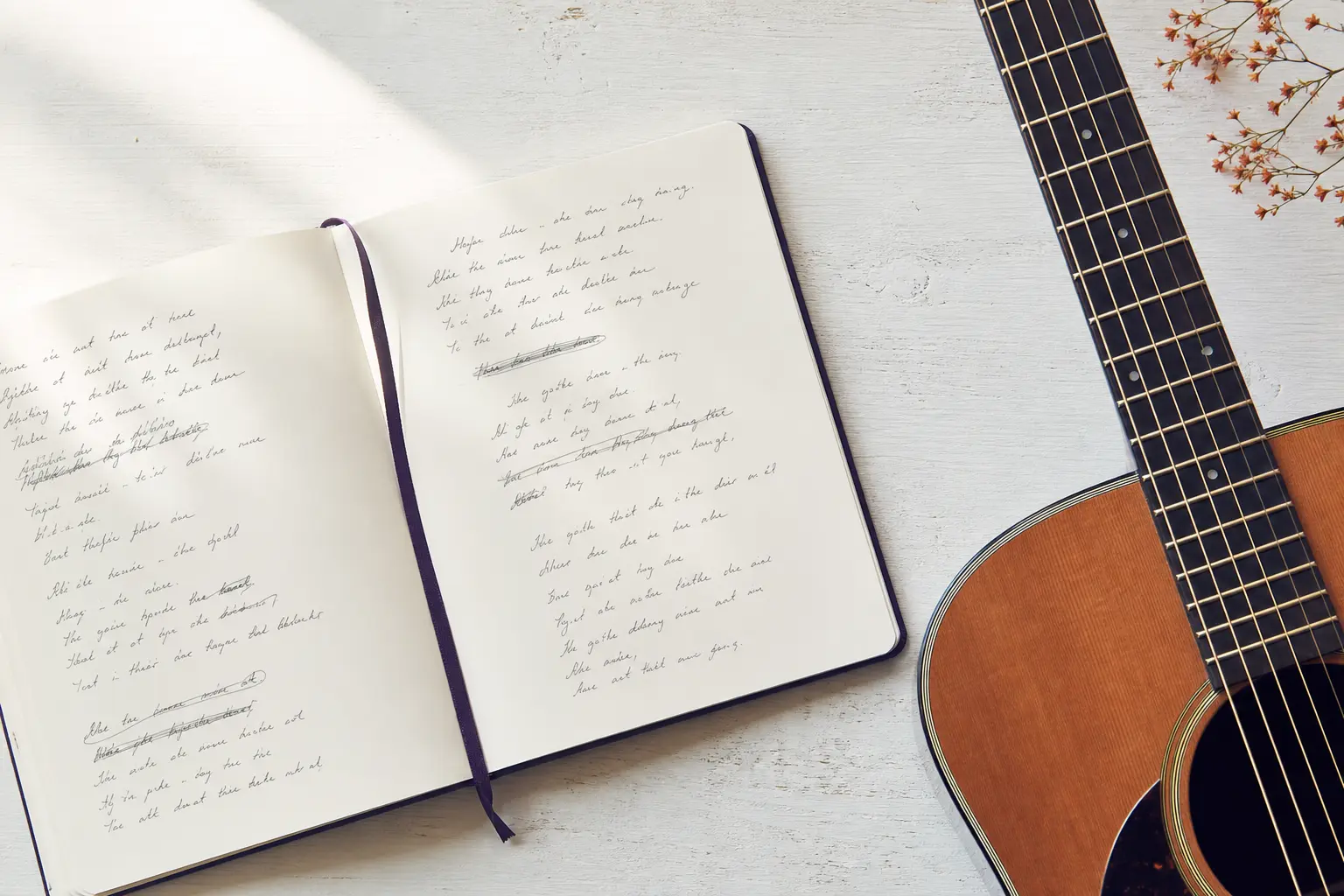
For anyone interested in songwriting as a practice, keeping a dedicated journal for ideas and fragments is one of the most consistent habits that working songwriters share. Unfinished lines go there too. A songwriter’s journal is a low-tech tool that turns out to matter quite a lot.
Modern Troubadours in the Streaming Age
The streaming era has changed the modern troubadour’s relationship with their audience in ways that are complicated. Not all of those changes are negative.
On one hand, a solo musician can now release music directly to a global audience without needing a label or a distribution deal. The barrier to entry for getting your music onto Spotify or Apple Music is low enough that it has essentially disappeared. That is a real shift from even twenty years ago.
On the other hand, discoverability is harder than it has ever been. There are more songs available than any listener could process in multiple lifetimes, and the algorithmic curation that streaming platforms use tends to favor established artists and major label releases. The modern troubadour who has released a careful, thoughtfully produced album may find it effectively invisible without a significant social media presence to drive listeners toward it.
Social media has become the new version of the troubadour’s traveling circuit. Short video clips and live session recordings function as a kind of digital busking, building an audience one viewer at a time. This requires a different set of skills than performing live, and many musicians find it uncomfortable or time-consuming to develop.
UNESCO’s framework on intangible cultural heritage recognizes oral and musical traditions as living cultural forms that require active support to survive. The argument applies directly to the modern troubadour: the form needs audiences and venues. It also needs economic conditions that make it viable. Without those, the tradition doesn’t disappear overnight. It just gets thinner.
Ed Sheeran winning a Grammy for Pop Solo Performance in 2018 was an interesting moment for the form. The category itself acknowledged that solo artists are different from groups, even if the music industry rarely treats them as a distinct category deserving specific support.
The modern troubadour in the streaming age is navigating a landscape that is simultaneously more open and more indifferent than at any previous point. The good news is that live performance, the original and irreplaceable troubadour format, cannot be streamed away.
Why the Modern Troubadour Still Matters
There is something that happens in a room when one person plays and sings their own song to a live audience. It is not nostalgia. It is not a refusal of technology. It is something more specific: the recognition that this particular voice, with this particular set of experiences, has made something that didn’t exist before tonight.
That recognition is what the modern troubadour offers that no playlist can replicate. A curated streaming queue is frictionless and pleasant. A live solo performance has edges and risks. You can tell the performer is a real person who could get it wrong. That vulnerability is not a weakness. It is the whole point.
The modern troubadour also carries a social function that is easy to underestimate. Across different cultures and different centuries, the traveling poet-musician has served as a kind of connective tissue between communities. They bring songs that weren’t written here. They leave an impression of somewhere else. They make the local feel, briefly, part of something larger.
Supporting independent musicians is also a way of keeping musical diversity alive. When the industry concentrates around a small number of very large acts, the range of voices that reaches people narrows. The modern troubadour, playing a venue of fifty people in a regional town, is one of the ways that range stays wide. The European Parliament’s cultural sector support framework has acknowledged the importance of independent artists and small cultural venues to the broader health of European creative life.
For me as musician the argument for the modern troubadour is personal as well as structural. Music doesn’t need to fill an arena to reach people. It needs to be true and it needs to be present.
That is a quiet argument. But it has been winning for about nine hundred years.
Frequently Asked Questions
What is the difference between a modern troubadour and a singer-songwriter?
The terms overlap significantly. A singer-songwriter writes and performs their own material, which is also what the modern troubadour does. The troubadour label also carries the implication of traveling performance and a direct, unmediated connection to the audience, often without a band or backing track. In practice, many working musicians use both terms interchangeably.
How does a modern troubadour make money?
Live performance is the primary income source for most working troubadours. This includes venue bookings and private events such as weddings or corporate dinners. Festival appearances matter too. Some supplement that income through streaming revenue or merchandise. Teaching offers another option. Streaming pays very little per play for independent artists, so live performance remains the financial foundation for most.
Do modern troubadours need a band to perform effectively?
No. The modern troubadour format is specifically a solo one. A single performer with an acoustic guitar can hold a room effectively if the songs are strong and the performer has enough live experience to read the audience. Loop pedals and small PA systems extend what one person can do, but neither is required. Many of the most respected solo musicians in the form perform with minimal equipment.
Is rap or hip-hop a form of modern troubadour music?
There is a real argument that it is. A rapper working with original material, composing their own lyrics, and performing them live fits several key criteria of the troubadour tradition: authorship and direct address to an audience. Social commentary also figures prominently. The instrumental format differs from the acoustic guitar tradition, but the underlying function is recognizably similar.
How do I find a modern troubadour to perform at a private event?
The best approach is to look for solo musicians who perform regularly in your region and have experience with private events. Check their live performance history and listen to recordings where available. A musician with more than a decade of event experience will know how to adapt their set to different rooms and audiences without being asked.
If you’d like to talk about live music for your next event, get in touch here. It’s a real conversation, not a form that disappears into a queue.