
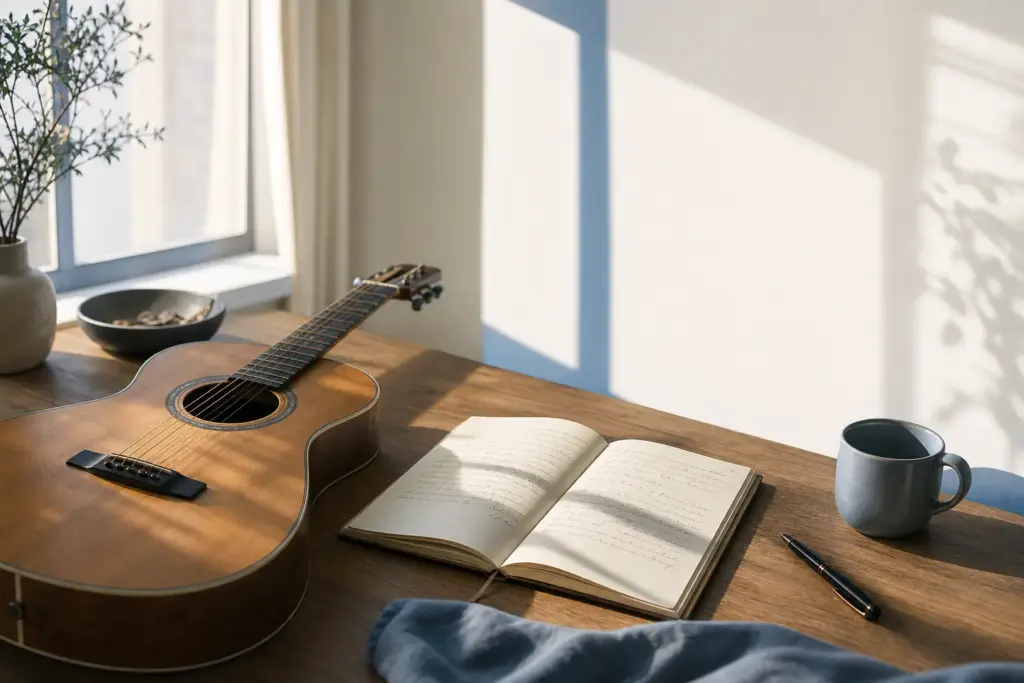
Music has always been a conversation between one person and the world. The independent songwriter is someone who chooses to have that conversation entirely on their own terms. An independent songwriter is an artist who writes and owns original music, releasing it without relying on a major publishing deal or record label. That choice brings real freedom and real responsibility.
Key Takeaways
- An independent songwriter retains full creative ownership and earns higher royalty percentages than signed counterparts, but must build every part of their career without institutional support.
- Songwriting craft is the foundation: no distribution strategy or social media presence compensates for weak songs, so continuous improvement of the writing itself is non-negotiable.
- Multiple income streams are how independent songwriters build financial stability over time. These include sync licensing and live performance, along with direct-to-fan sales.
- Building a genuine team of trusted collaborators and professionals reduces the creative and logistical burden that comes with going independent.
- The independent path is slower than the label route, but the long-term rewards in ownership and creative control are substantially greater for those who stay consistent.
After reading this guide, you will know how to structure your approach to songwriting as an independent artist. You will learn to protect your creative work and reach people with your music in ways that feel honest rather than transactional.
What It Really Means to Be an Independent Songwriter
Going independent is not simply a business decision. It is a declaration about how you want to create and what you are willing to trade for creative control. Most people entering the music industry imagine a binary choice: get signed, or stay small. That framing misses the real picture entirely.
The reality is that the independent route offers more ownership and higher long-term payouts. However, it takes longer to build momentum. There is no A&R team pushing your songs and no publisher pitching your catalog. No label absorbs your release costs. Every decision falls to you.
That weight is genuine. The independent songwriter hustle is demanding, not just financially but emotionally. As one working New York songwriter put it, the grind is taxing in ways social media simply does not show. The Instagram version of independence looks like freedom. The actual version looks like spreadsheets and rejected demos. Unanswered emails fill the early years.
What independence offers in return is control. You decide when to release and how to price your work. You choose who gets to use it. You own your masters and choose your collaborators. That is not a small thing. For many artists, it is the only thing that makes the work feel real.
Have you ever considered what you would trade for the freedom to make exactly the music you want? That question is worth sitting with before committing to either path.
Craft First: Why the Song Is Always the Foundation
Before distribution strategies or social media plans, before sync pitching, there is the song. Every serious independent songwriter eventually arrives at the same conclusion: the work itself has to be the main focus. Everything else is downstream of that.
Songwriting is a craft, and craft improves with deliberate practice. Writing more often and working with new collaborators sharpen your skills. Studying songs that move you deepens your understanding. These habits are not optional extras. They are the work. No matter how strong your previous releases are, there is always room to grow.
Developing a Consistent Writing Practice
A consistent writing practice does not mean writing every single day at the same time. It means treating songwriting as a genuine discipline rather than waiting for inspiration to arrive. Singer-songwriter Kendra McKinley describes her process as a kind of “lather, rinse, repeat” approach: she records whatever exists of a song and listens back. Then she makes a new recording until the song fully develops.
That iterative process is honest and unglamorous. It is also exactly how strong songs get written. The myth of the song that arrives fully formed is exactly that: a myth. Most good songs are built, not received.
Collaboration as a Creative Tool
Working alone is possible, but working with the right collaborator often reveals parts of a song you could not have found on your own. A co-writer with strength in melody can lift a lyric-first writer’s work in ways that solo revision never could.
Co-writing does not dilute independence. It strengthens the song, which is what independence is actually for. I have found, after more than 15 years of performing and writing, that the most honest songs often come from conversations. Sometimes with another writer. Sometimes with a silence that finally breaks.
Understanding Ownership and Royalties as an Independent Songwriter
Ownership is the clearest advantage the independent songwriter holds over signed counterparts. When you write and release music without a publishing deal, you retain both the writer’s share and the publisher’s share of every royalty generated. That difference is significant over time.
Royalties from songs come from multiple sources. Performance royalties are collected when your music is played publicly, whether on radio, in venues, or streamed online. Mechanical royalties are generated when your music is reproduced, whether physically or digitally. Both types flow through collecting societies, and registering your work correctly is non-negotiable.
Registering with a Performing Rights Organization
In Switzerland and across Europe, registering with a performing rights organization such as SUISA is the essential first step. SUISA collects and distributes royalties for Swiss music creators. Without registration, royalties that belong to you simply go uncollected.
Registration is straightforward. It protects your work and ensures that every public performance or broadcast generates the income you are legally owed. Not registering is one of the most common and costly mistakes an independent songwriter can make in the early stages of a career.
Publishing Administration for Independent Writers
Without a publishing company, you are your own publisher. That means you can sign up with a publishing administrator, a service that registers your songs globally and collects royalties across multiple territories. You keep full ownership of your catalog. This model offers the reach of a publisher without surrendering creative or financial control.
The trade-off is that you handle the administration yourself, or pay a small percentage to someone who does it for you. For most independent songwriters, that trade is well worth it.
Building Multiple Income Streams from Your Songwriting
Relying on streaming income alone is not a viable financial plan for most independent songwriters. The per-stream payouts from major platforms are genuinely small. Building enough streams to generate a living wage takes years and a large catalog. The artists who sustain themselves do so by layering multiple sources of income.
Each stream requires different effort and different skills. Understanding which ones suit your music and your temperament is part of building a sustainable career.
Live Performance as a Revenue Source
Live performance has always been one of the most direct ways a songwriter connects with an audience and earns income. A live show creates something that a recording simply cannot replicate: a shared moment between a real person and real people in a room.
I have been performing live music at concerts and private events for more than 15 years. What I know from that experience is that audiences do not pay for a performance. They pay for presence, for the feeling that something real is happening in front of them. That distinction shapes everything about how a live show is built.
Private events, such as weddings and corporate gatherings, are often more financially stable than public gigs. They are also booked further in advance, which helps with planning. For an independent songwriter willing to perform original work alongside well-chosen covers, private events can anchor the financial year while leaving space for more artistically ambitious public shows.
Teaching and Custom Compositions
Offering private music lessons is another income stream that complements the writing life rather than distracting from it. Teaching reinforces your own understanding of music and keeps you connected to the fundamentals of the craft.
Custom songs written specifically for a client’s event or purpose are a growing area of demand. A custom composition for a wedding or a brand requires genuine craft and emotional attunement. Personal occasions demand the same care. It is not lesser work. For many songwriters, it is some of the most meaningful work they do.
Sync Licensing and the Independent Songwriter’s Opportunity
Sync licensing, placing your music in film, television, advertising, or video games, is one of the highest-earning opportunities available to an independent songwriter. A single well-placed sync can generate more income than months of streaming revenue. It also reaches people who would never have discovered your music otherwise.
The challenge is that sync is a relationship business. Music supervisors receive enormous numbers of submissions. Without a network and a catalog that genuinely meets the specific needs of a project, your music will not be placed. Quality alone is not enough.

Building the Right Network for Sync
Networking for sync licensing means building genuine relationships with music supervisors and producers. It also means connecting with other writers who already have placements. Attend industry events and be present in online communities where supervisors are active. Make your catalog easy to search and license.
Metadata matters here. Every track in your catalog should be accurately tagged with mood and tempo. Include instrumentation details so that a supervisor searching for a specific sound can find it quickly. A disorganized catalog loses placements that a well-organized one would win.
What Sync Supervisors Actually Need
Music supervisors are not looking for the most impressive song. They are looking for the right song for a specific moment in a specific scene. That means your catalog needs depth and variety. Include different tempos and different emotional registers. Vary your production styles as well.
An independent songwriter who has built a catalog of 30 or 40 well-recorded tracks across a range of moods is far more useful to a sync supervisor than one with three perfect singles. Breadth and organization are what get your music placed.
Building a Team Without Losing Your Independence
Independence does not mean doing everything alone. In fact, the most sustainable independent songwriters are those who build a small, trusted team around them. The goal is not to replace their creative voice, but to handle the work that pulls them away from it.
As Kendra McKinley observed in a conversation with Musical U, being an independent artist means being expected to wear all the hats. You become the performer and the manager. You become the accountant and the publicist too. The reality is that doing all of it yourself has a negative impact on the art. Building a team is not a concession. It is a creative decision.
Who to Bring In First
The first collaborator most independent songwriters benefit from is a producer. A good producer does not overwrite your sound. They reveal it more clearly. The second addition is often someone who handles the administrative side: a booking contact, a sync pitching service, or a publishing administrator.
You do not need a large team. You need the right people in the right roles, each one freeing you to spend more time on the thing that only you can do: writing the songs.
Protecting Creative Control Within a Team
The fear that bringing in collaborators means losing your voice is understandable. The solution is clarity from the beginning. Define ownership splits in writing before any collaboration begins. Use split sheets for every co-written song. Know what you are agreeing to before you agree to it.
These conversations are not awkward when they happen early. They only become awkward when a song takes off and nobody remembers what was decided. A brief, honest conversation at the start protects the work and the relationship.
Self-Releasing Music in the Digital Age
The infrastructure for self-releasing music has never been more accessible. Recording on professional-grade systems became affordable for individuals in the late 1990s, as Wikipedia’s history of the singer-songwriter genre notes. The internet gave independent artists a way to reach a wider audience without label support. Today, the tools are better still.
Digital distribution services allow any independent songwriter to place music on every major streaming platform for a small annual fee. The barrier to distribution is effectively gone. What remains is the harder question: how do you reach people who do not already know you exist?
Release Strategy and Catalog Building
A single release rarely builds momentum on its own. A consistent release schedule, whether that means one song per month or one EP per season, signals to both algorithms and audiences that you are an active artist. Consistency is not glamorous, but it is what separates artists with growing catalogs from those with promising debuts that went nowhere.
Think of your catalog as a body of work rather than a collection of individual releases. Each song is a chapter. The listener who discovers track seven and works their way back through your catalog is the listener who becomes a genuine fan.
Platforms and Direct-to-Fan Connection
Streaming platforms are discovery tools. They are not relationship tools. Building a direct connection with your audience gives you something that algorithm changes cannot take away. An email list works well for this, and so does a Bandcamp page or a community around your work.
Platforms like Bandcamp allow fans to pay directly for music and support artists at a higher margin than streaming. For an independent songwriter whose audience values the work, that direct relationship has real financial and emotional weight. Not because it scales quickly, but because it is honest.
Playing the Long Game: Identity, Consistency, and Honest Artistry
The most durable careers in independent songwriting are built on a clear artistic identity, not on chasing what is working for someone else. An independent songwriter who writes from a genuine place, from something real they need to say, will always have more to offer than one who writes toward a trend.
This is not a romantic notion. It is a practical one. Trends cycle. An artist with a distinctive voice and a catalog that reflects genuine depth has something that outlasts any single moment in the market.
Authenticity Over Visibility
There is enormous pressure in the digital music world to be visible: to post constantly and perform for the algorithm. The pressure to make content rather than music is real. I am not suggesting you ignore it entirely. But visibility without substance is a short road.
The independent songwriter who builds an audience slowly, through honest work and genuine connection, tends to build an audience that stays. That is a different proposition from the one with 50,000 followers who disappear when the next trend arrives.
Continuing to Grow as a Songwriter
Growth as a songwriter does not stop at a certain level of success. The craft deepens the more you give it. Continuing music education keeps the work alive and prevents the creative stagnation that catches many independent artists mid-career. Study harmony and study lyrics. Ask questions of fellow professionals.
I have offered private guitar lessons for children and adults around Lake Constance for years, partly because teaching is itself a form of learning. Every student’s question is a question about music I had stopped asking. That is worth something.
The independent path is a story of craft and persistence. It asks a great deal. It also gives back in the only way that matters: it lets you make music that is genuinely yours.
FAQ
How do I start out as an independent songwriter with no audience?
Start by building a small catalog of well-finished songs before releasing anything publicly. Register with a performing rights organization so your royalties are protected from the first release. Then focus on one or two platforms where your music is most likely to connect with real listeners. Release consistently rather than sporadically. An audience of 200 people who genuinely care about your work is more valuable than 2,000 passive followers.
How much money can an independent songwriter realistically earn?
Income varies enormously depending on catalog size, live performance activity, and licensing opportunities. Streaming alone rarely generates a living wage at the independent level. Most independent songwriters who sustain themselves financially combine performance fees with sync licensing income. They also earn royalties and cultivate direct-to-fan sales, while some choose to teach as well. Building multiple income streams over several years is the realistic path to financial stability.
Do I need a publishing deal to make money from my songs?
No. An independent songwriter can collect both the writer’s share and the publisher’s share of royalties by registering directly with a performing rights organization. Use a publishing administrator to collect income globally. A publishing deal gives you upfront advances and a pitching team, but it costs you a percentage of your ownership, sometimes permanently. Many independent songwriters find that retaining ownership and administering their own catalog is the better long-term choice.
How do I get my music placed in film or TV as an independent songwriter?
Sync licensing requires a well-organized catalog with accurate metadata. You also need a genuine network of music supervisors and producers, along with music that genuinely fits the emotional and tonal needs of visual content. Start by attending industry events and music licensing conferences. Research which supervisors work on projects that suit your sound. Submit to licensing libraries to build a track record. Placement takes time and persistence, but an independent songwriter with a deep, well-tagged catalog has a real chance.
Is it better to co-write songs or write alone as an independent artist?
Both approaches have genuine value, and most independent songwriters use both depending on the project. Solo writing gives you complete creative control and a song that reflects only your voice. Co-writing often produces stronger songs and opens doors to collaborators’ networks. The key is to use split sheets from the very first session so that ownership is clear before any song is released or pitched.
If you are building your path as an independent songwriter and want to connect with someone who has spent more than 15 years doing exactly that, writing and performing and finding honest ways to share music, I warmly invite you to visit how to hire a songwriter and reach out.