You know that moment when a song comes on and the whole room shifts? A custom song for weddings in Switzerland is, at its core, a piece of music written specifically about two people — their story and their day. It is not borrowed from a playlist and it does not belong to anyone else’s memory. When a musician sits down to write one, they are working from your details: the place you met and the inside joke that only your closest friends understand. They listen to the way you describe each other when you think no one is paying attention.
Key Takeaways
- A custom song for weddings in Switzerland is an original composition written about a specific couple’s story, distinct from any pre-existing track.
- The songwriting process typically involves a consultation and lyric drafting. Melody development and a final recording or live performance follow.
- Pricing in Switzerland for custom wedding music varies widely based on complexity and recording needs. The musician’s experience also affects cost.
- Booking a songwriter well in advance — ideally several months before the wedding date — gives the best results.
- A custom song can be used at the ceremony or the first dance. It also works well for the father-daughter dance or as a recorded gift.
By the end of this guide, you will understand how the process works and what questions to ask a songwriter. You will also learn how to make the most of a piece of music written to exist for exactly one reason: your wedding day.
Why a Custom Song Changes the Atmosphere
There is a difference between music that fills a room and music that reaches the people in it. A standard playlist, however well-curated, asks guests to borrow someone else’s associations. A custom song arrives with no prior context. It belongs only to the moment it was written for, and that absence of familiarity is actually what gives it weight.
Think about the last wedding you attended where something unexpected happened during the ceremony. A reading that was clearly written for that couple specifically. A speech that named a real memory, not a general tribute. The room changes. People stop performing their attention and start actually paying it.
A song written with that same specificity does the same thing. Your guests may not know the melody, but they will recognize the truth in the lyrics. They will hear the songwriter name your city or your dog. They might catch the reference to the argument you had about furniture. They will understand that this moment was made deliberately. That specificity is harder to manufacture than production value, and it is more likely to be the thing people remember.
According to SUISA, the Swiss music rights society, original compositions represent a growing category of commissioned music in Switzerland. This reflects a broader appetite for music made for a particular context rather than consumed from a catalog. The appetite is real, and weddings are one of the clearest expressions of it.
I have been playing live music at concerts and private events for more than 15 years. The moments that seem to stay with people are almost always the ones that felt made rather than chosen. That is not a sales argument. It is just what I have noticed.
The Songwriting Process: From Story to Song
The process of creating a custom wedding composition is more collaborative than most couples expect. It does not begin with a musician sitting alone with a guitar. It begins with a conversation, and often several of them.
Step One: The Initial Consultation
A songwriter needs raw material. That means asking questions that go beyond “what genre do you like?” Good questions sound more like: Where did you first realize this was serious? What do they do that drives you slightly crazy but you actually love? What is the one story about your relationship that you always end up telling at dinner parties?
These details are the building blocks. The songwriter is not writing a biography. They are finding the two or three images that carry the whole emotional weight of the story and building a song around those.
Step Two: Drafting and Feedback
After the consultation, the songwriter produces an initial draft, usually lyrics first and then a melody sketch. Most musicians working in this space will share that draft for feedback before recording or rehearsing a final version. This is your opportunity to say “that line doesn’t sound like us” or “can you bring in the part about our first trip together?”
Expect one or two rounds of revisions. The process is genuinely collaborative, but it works best when you trust the songwriter’s judgment on craft while being specific about emotional accuracy.
Step Three: Final Arrangement and Delivery
Once the song is approved, it moves into its final form. That might be a studio recording or a live acoustic arrangement. Some couples opt for a full performance at the wedding itself. The format depends on your venue and your budget, as well as how you intend to use the song on the day. Each option has different lead times, so this conversation should happen early.
Custom Song for Weddings in Switzerland: Regional Context
Switzerland has a few characteristics that make commissioning a custom song for weddings in Switzerland slightly different from doing the same thing in other countries. The multilingual context matters. A couple in Zurich may want a song in Swiss German or English, or perhaps a mixture of both. A couple in Lausanne will likely want French. A wedding in Lugano might call for Italian. A good songwriter working in Switzerland is comfortable navigating that, or is honest about which languages they work best in.
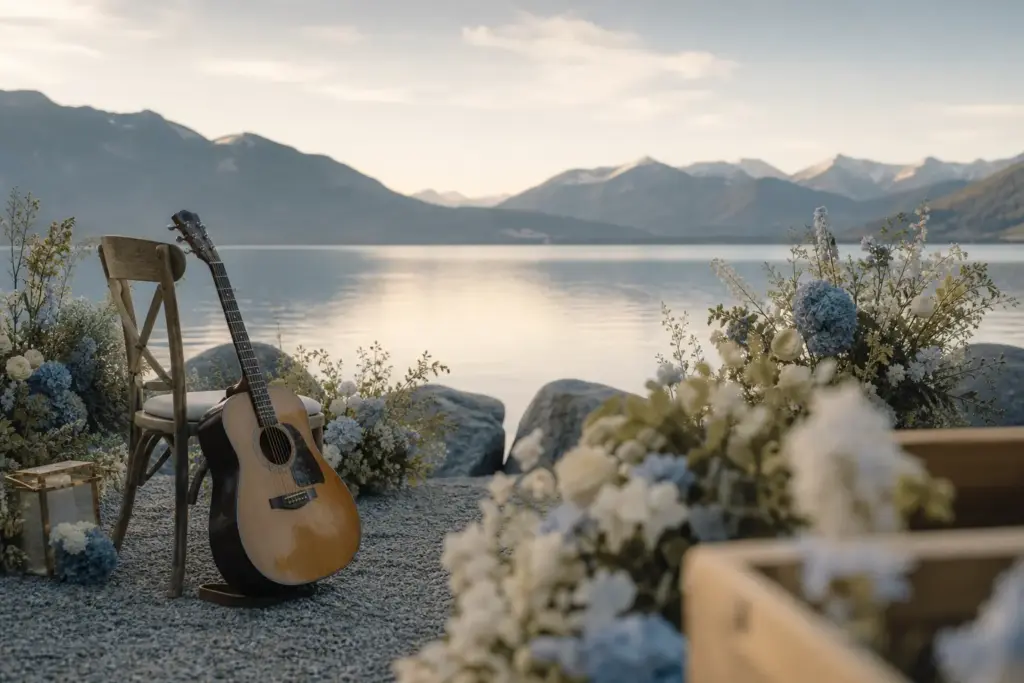
The landscape also matters in a practical sense. Many Swiss wedding venues sit in settings where acoustics are unpredictable, whether beside lakes or in mountain hotels. Vineyard estates present their own challenges. An outdoor ceremony near Lake Constance sounds nothing like a stone chapel in the Bernese Oberland. The musician you choose should understand how to adapt an arrangement to the space.
Wedding musicians in Switzerland are booked across a wide range of formats. According to data compiled by GigHeaven’s Switzerland wedding musician listings, solo acoustic performers in Switzerland start at around CHF 130. Full ensemble bookings can reach CHF 1,400 or more, with an average booking price of CHF 410. Custom songwriting adds to that baseline because it involves work done before the event day itself.
Switzerland is also a country where legal formalities around weddings are handled with precision. The civil ceremony is required; the rest is personal expression. A custom song sits firmly in that personal layer, and Swiss couples tend to approach it with the same care they bring to every other detail of the day.
If you are planning a wedding near Lake Constance specifically, it is worth knowing that musicians based in that region are familiar with the cross-border nature of events there. Guests often travel from Germany and Austria as well as Switzerland. Language flexibility and travel willingness both become relevant. You can learn more about live music options in that area at Live Music Entertainment Lake Constance.
When to Use Your Custom Song During the Wedding
One of the first decisions after commissioning a song is where it lives in the day. There is no single right answer, but there are natural moments where a custom composition lands with the most impact.
The Ceremony
Walking down the aisle to a song written specifically about your relationship is a different experience from walking to a well-known track. Guests who know your story will hear it reflected in the lyrics in real time. It is an intimate and slightly disorienting experience in the best way.
Some couples use the song as the recessional instead. This means the first time the guests hear it together is as the couple walks out married. That framing, the song as a release rather than a build, works very well emotionally.
The First Dance
The first dance is the most common placement for a custom wedding composition, and it makes structural sense. The song is long enough to fill a dance and personal enough to hold the room’s attention. It is tied to a moment that is already photographed and remembered.
If you plan to use the song here, make sure the tempo suits dancing. A beautiful ballad that is too slow to move to can become awkward after ninety seconds. Talk to your songwriter about the practical needs of the moment, not only the emotional ones.
As a Gift
Some couples commission a custom song not for the ceremony or reception but as a gift, either to each other or to a parent. A father-daughter dance song written about a specific relationship is genuinely different from a borrowed classic. It tends to produce a different kind of reaction in the room.
What Makes a Good Brief for Your Songwriter
The quality of a custom wedding song depends heavily on what the songwriter has to work with. A vague brief produces a vague song. A specific brief produces something that sounds like no one else’s wedding.
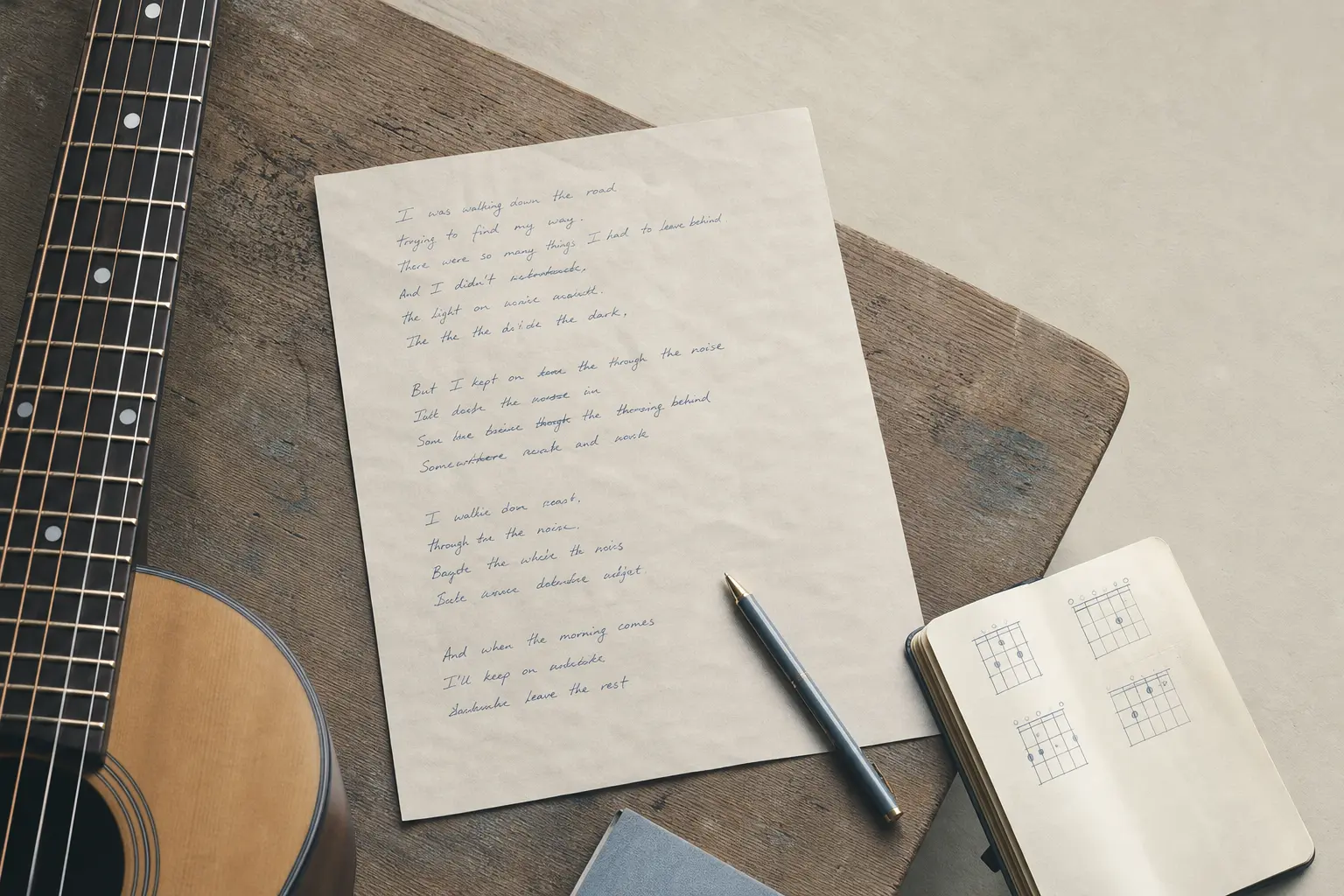
The most useful briefs share a few things in common. They name real places rather than generic ones. They describe a memory with sensory detail rather than an emotion in the abstract. They identify what the couple actually sounds like together, not what they think they should sound like at a wedding.
Here is a comparison of brief quality to help illustrate the difference:
| Vague Brief | Specific Brief |
|---|---|
| We love traveling together | We got lost in Porto at 2am and ended up eating the best soup either of us has ever had |
| She makes me a better person | He started reading again because she left a book on the nightstand without saying anything about it |
| We have been through a lot | We moved cities twice in one year and argued about every box label |
| We want something romantic | We want it to feel like the last hour of a long road trip when you know you are nearly there |
The second column gives a songwriter something to work with. The first column gives them nothing they could not have invented. Write your brief the way you would tell the story to someone who has never met you. Be willing to include the parts that are funny or slightly embarrassing. Those are usually the parts that make the song feel real.
Cost and What to Expect When Budgeting
Pricing for a custom wedding song in Switzerland is not standardized, and that is worth understanding before you start reaching out to musicians. The cost reflects time as much as talent. The consultation and the writing add up separately from any live performance fee. The revisions and delivery format also affect the total.
As a rough guide, a solo songwriter who writes and records a finished track for personal use might charge anywhere from CHF 500 to CHF 1,500. This depends on the complexity of the arrangement. If live performance at the wedding is included, the price increases accordingly. Full-band arrangements with studio recording sit at the higher end.
What you should always clarify before booking:
- How many revision rounds are included in the price
- Whether the delivered file is a full studio recording or a demo-quality acoustic track
- Who owns the rights to the final song
- Whether the musician will perform the song live, and what that costs separately
Rights ownership is a practical question that couples often overlook. According to SUISA’s guidelines on commissioned music in Switzerland, the default position under Swiss copyright law is that the creator retains authorship rights even for commissioned works. Most songwriters will grant the couple full personal use rights, but it is worth confirming in writing. This is especially important if you plan to share the recording publicly.
Budget for the song as a distinct line item in your wedding planning, separate from the live music entertainment budget. They are related but not the same thing. A custom song is a composition fee; a live performance is a performance fee. Sometimes one person provides both, but the costs are separate by nature.
Live Performance vs. Studio Recording
Once a custom song exists, you have a genuine choice about how it reaches your guests. A studio recording played through the venue’s sound system is clean and controlled. It is also repeatable. A live performance is none of those things, and that is exactly its appeal.
The Case for a Studio Recording
A recording gives you certainty. The mix is balanced and the tempo is consistent. Nothing can go wrong in the moment. If you are playing the song during a ceremony where emotional reactions are unpredictable and timing matters, a recording is easier to manage logistically.
A recording also gives you something to keep. Long after the wedding, you have a finished piece of music that you can listen to or share with family. You can include it in a wedding video. That tangibility has real value.
The Case for Live Performance
Live music carries a different kind of presence. It breathes. A performer who has written a song and then plays it live in the room where it was commissioned is doing something that a recording cannot fully replicate. The small variations matter. The way a voice cracks slightly on a particular line and the eye contact: these are things that happen in the room and stay there.
For couples who want the full weight of a live moment, working with a musician who can both write and perform the song is the most direct path. You can explore what a live songwriter and performer offers at Songwriter and Singer Lake Constance.
A Hybrid Approach
Some couples use both: a live performance at the ceremony or first dance, and a studio recording delivered afterward as a keepsake. If the budget allows for it, this approach gives you the emotional impact of live music and the permanence of a finished recording. It is worth asking your songwriter whether they offer this combination.
Finding the Right Musician for Your Wedding Song
Not every musician who plays at weddings also writes original material. Not every songwriter who writes original material is equipped to work in the commissioned, collaborative context that a custom wedding song requires. The skill sets overlap but are not identical.
When you are looking for the right person, ask to hear examples of previous custom wedding songs they have written, not just their general performance work. The two are different in character. A custom song should sound like it was made for a specific person, not like a competent original track that could belong to anyone.
Ask about their process, too. A songwriter who cannot describe how they gather information from a couple or how they structure the consultation is probably working without a reliable method. The same applies if they cannot explain how they handle feedback. That does not mean the result will be bad, but it does mean the process will be less predictable.
Geography matters for live performance. A musician based near your venue can do a site visit and understands the acoustic environment. They also do not carry long-distance travel costs into the quote. For weddings around Lake Constance and the broader Swiss-German border region, a locally based musician makes practical sense. You can see what that kind of work looks like in practice at Solo Musician Lake Constance.
Finally, trust your instinct about the person. You are sharing real stories with this musician, details about your relationship that may not appear in your wedding speech or on your Instagram. The conversation needs to feel comfortable. If it does not feel comfortable in the initial consultation, the song will probably reflect that.
Frequently Asked Questions
How far in advance should I book a songwriter for a custom wedding song in Switzerland?
Most songwriters recommend booking at least three to four months before your wedding date. This allows time for consultation and drafting. It also leaves room for revisions and final recording or rehearsal. Booking earlier, six months out for instance, gives more flexibility if revisions take longer than expected or if you want a live performance on the day.
Can I have the song written in more than one language?
Yes, and in Switzerland this is more common than in many other countries. A song with a verse in German and a chorus in English, for example, can reflect a bilingual couple’s daily life. The key is working with a songwriter who writes fluently in both languages rather than one who translates their own lyrics. Ask to hear examples of multilingual work before committing.
What happens to the copyright of the song after it is written?
Under Swiss copyright law, the creator retains authorship rights by default, even for commissioned works. Most songwriters will grant the couple full personal use rights in the contract. This means you can play the recording at the wedding and share it with family. You can also include it in a wedding video. Public distribution rights, such as posting on streaming platforms, are a separate question and should be clarified in writing before you sign anything.
How much does a custom wedding song typically cost in Switzerland?
Costs vary depending on the complexity of the arrangement and whether a studio recording is included. Whether the musician also performs the song live affects the total as well. A solo acoustic custom song with a finished recording typically falls in the range of CHF 500 to CHF 1,500. Adding live performance at the wedding increases the cost, as does a full-band arrangement. Always ask for an itemized quote so you understand what each part of the fee covers.
Do I need to provide a demo or reference track for the songwriter?
You do not need to provide a reference track, but it can be helpful. A reference gives the songwriter a sense of the genre and tempo you are drawn to. It also conveys mood. More useful, though, is a clear brief with specific details about your relationship. The best custom wedding songs come from real stories, not from a direction to write something that sounds like a particular artist.
If you are thinking about commissioning a custom song for your wedding, the easiest next step is a conversation. Get in touch with Martin to talk through your ideas and your venue. Together you can determine what kind of song would actually fit your day.