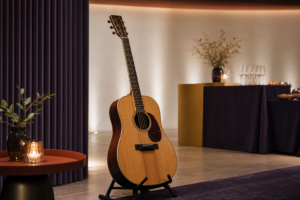

Picture the moment the doors open and the first notes fill the room. That sound — whatever instrument it comes from — is the thing your guests will feel before they even register it consciously. A ceremony musician is a live performer hired specifically to provide music for the formal stages of a wedding or other ceremonial event, from the prelude through to the recessional. Getting that choice right shapes the emotional texture of the whole day, which is why it deserves more thought than most couples give it at the start.
Key Takeaways
- A ceremony musician provides live music at the formal stages of a wedding, covering prelude and processional moments as well as the recessional.
- The instrument choice defines the atmosphere more than the song list does. Guitar and strings each create distinct moods, as do harp, piano, and voice.
- Booking a ceremony musician 6–12 months before the date is standard practice for peak wedding seasons.
- Live music at a ceremony communicates a different quality of attention than a playlist. Guests notice the difference without always knowing why.
- Discussing logistics like acoustic versus amplified setup and venue access with your musician well in advance prevents the most common problems. Repertoire approval should also happen early.
By the end of this guide, you will know how to compare instrument formats and plan a coherent repertoire. You will also learn to navigate the booking process and avoid the logistical mistakes that catch couples off guard on the day itself.
Why Live Music Matters at a Ceremony
There is a particular quality that live music has in a room that no recorded track can replicate. A ceremony musician reads the pace of the procession in real time and adjusts, slowing down if someone needs a moment or holding a note a fraction longer when the emotion in the room asks for it. A playlist cannot do that.
Research on music and emotional response supports this intuitively. The American Psychological Association’s overview of music and emotion research confirms that live musical performance activates emotional responses more intensely than recorded playback. Listeners respond not just to the sound but to the visible physical act of producing it.
That visibility matters. When guests watch a musician play, they are not passive. They lean in slightly and hold their breath at a difficult passage. They exhale when the phrase resolves. That shared physical attention is what turns a room full of individuals into an audience for a moment that belongs to everyone.
There is also a practical argument. Recorded music depends on equipment working perfectly and a reliable power supply. Someone at a laptop must make real-time decisions. A skilled ceremony musician carries the music in their hands and their memory. The margin for error is different in kind, not just in degree.
I have been performing live music at concerts and private events for more than 15 years. The moments that stay with people longest are almost never the loudest or most technically complex ones. They are the quiet moments when the music and the occasion meet exactly.
Instrument Options and the Atmosphere Each Creates
The instrument your ceremony musician plays sets the emotional register of the whole event before a single word is spoken. Choosing between a harpist and an acoustic guitarist is not just an aesthetic decision. It is a decision about what kind of ceremony you are having.
| Instrument | Atmosphere | Best Setting |
|---|---|---|
| Acoustic guitar | Warm and intimate | Garden, small chapel, outdoor terrace |
| String quartet | Formal and resonant | Grand hall, large church, estate venue |
| Harp | Ethereal and distinctive | Classic church, manor house |
| Piano | Versatile and full | Ballroom, hotel ceremony room |
| Solo voice | Immediate and personal | Intimate ceremony of any size |
The acoustic guitar deserves a longer note here because it is often underestimated. It is genuinely versatile, capable of classical fingerpicking as well as soft folk and contemporary pop arrangements. It carries a room without amplification at the scale most wedding ceremonies actually use. A well-played classical guitar in a stone chapel sounds complete. Nothing is missing.
A string quartet is the traditional choice for good reason. The blend of two violins with viola and cello produces a warmth that fills a large space without overwhelming it. The repertoire available to a string quartet is enormous, from Baroque processionals to current chart arrangements.
The harp is a more distinctive choice. It is genuinely beautiful to watch as well as hear, and the sound it produces is unlike anything else. However, it is also heavy and difficult to transport. Temperature changes affect it significantly. If you want a harpist, confirm transport access to your venue early.
A solo vocalist, with or without instrumental accompaniment, brings a different quality. The human voice is the instrument people connect with most directly. A single song sung well can do more emotional work in three minutes than an hour of background instrumentation.
What a Ceremony Musician Actually Does: Roles and Timing
A ceremony musician is responsible for music across several distinct phases of the event. Understanding those phases helps you have a more productive conversation when you book someone.
The prelude is the music that plays as guests arrive and take their seats, typically starting 20 to 30 minutes before the ceremony begins. This is background music in the best sense. It fills the space and reduces social awkwardness while setting a tone. Most musicians will play a prepared set of pieces or improvise around a style you agree on in advance.
The processional is the music that accompanies people walking in. This usually includes a separate piece for the wedding party and a distinct piece for the person or persons being accompanied down the aisle. The second piece is often more emotionally charged. Timing is everything here. A ceremony musician needs to watch as well as play, cueing the music to the actual movement rather than a clock.
During the ceremony itself, a musician may be asked to play during a unity candle lighting or a sand ceremony. Some couples also include a vocal or instrumental solo mid-ceremony as a dedicated musical element.
The recessional follows the officiant’s pronouncement and is typically the most joyful piece of the set. It should feel upbeat and celebratory. After the recessional, many musicians continue with postlude music for up to 20 minutes while guests move out of the ceremony space.
Knowing this arc before you meet a potential musician means you can ask the right questions about repertoire for each phase. You can also confirm they are comfortable with the timing cues your ceremony will require.
If you are curious about what working with a live performer across the full arc of an event looks like, the live guitar music and events page gives a real picture of what that involves.
Repertoire Planning: Choosing Songs That Fit
Repertoire planning is where most couples spend too little time and then wish they had spent more. The song for the processional will be attached to that moment for the rest of your lives. It is worth choosing it with care.
Start with the emotional arc you want across the ceremony. The prelude music can be calm and exploratory. The processional for the wedding party can be a step more formal. The entrance of the couple is usually the emotional peak of the opening section, and the music needs to hold that weight. The recessional should feel like release, like the held breath finally letting go.
Within that arc, consider the instrumental format you have chosen. Not every piece translates well to every instrument. A song that is beautiful on piano may lose something essential on solo guitar. A good ceremony musician will tell you this honestly and suggest alternatives that carry the same feeling. Ask them directly: what does this piece sound like on your instrument, and is there something that would serve this moment better?
Guests’ familiarity with a piece matters, but it is not the only measure of suitability. A piece they have never heard before but that is immediately emotionally legible can land harder than a familiar song played without conviction. Think about what the music needs to do in each moment, not just what it is called.
For inspiration on how original composition can serve a specific moment, the work described at songwriter and singer Lake Constance shows what happens when music is built around a specific emotional intention rather than pulled from a general catalogue.
Finally, confirm the full list in writing with your musician. Agreed repertoire should be settled at least a month before the date. Include alternatives if a piece proves difficult in the venue’s acoustics.
The Booking Process for a Ceremony Musician
Booking the right ceremony musician takes longer than most couples expect. Starting early protects you from the compromise of settling for whoever is still available close to your date.
The general recommendation from wedding planners and music suppliers is to begin your search 6 to 12 months in advance for peak season dates, typically late spring through early autumn. A ceremony musician who is good at what they do will have a full diary. The best ones often book a year out.
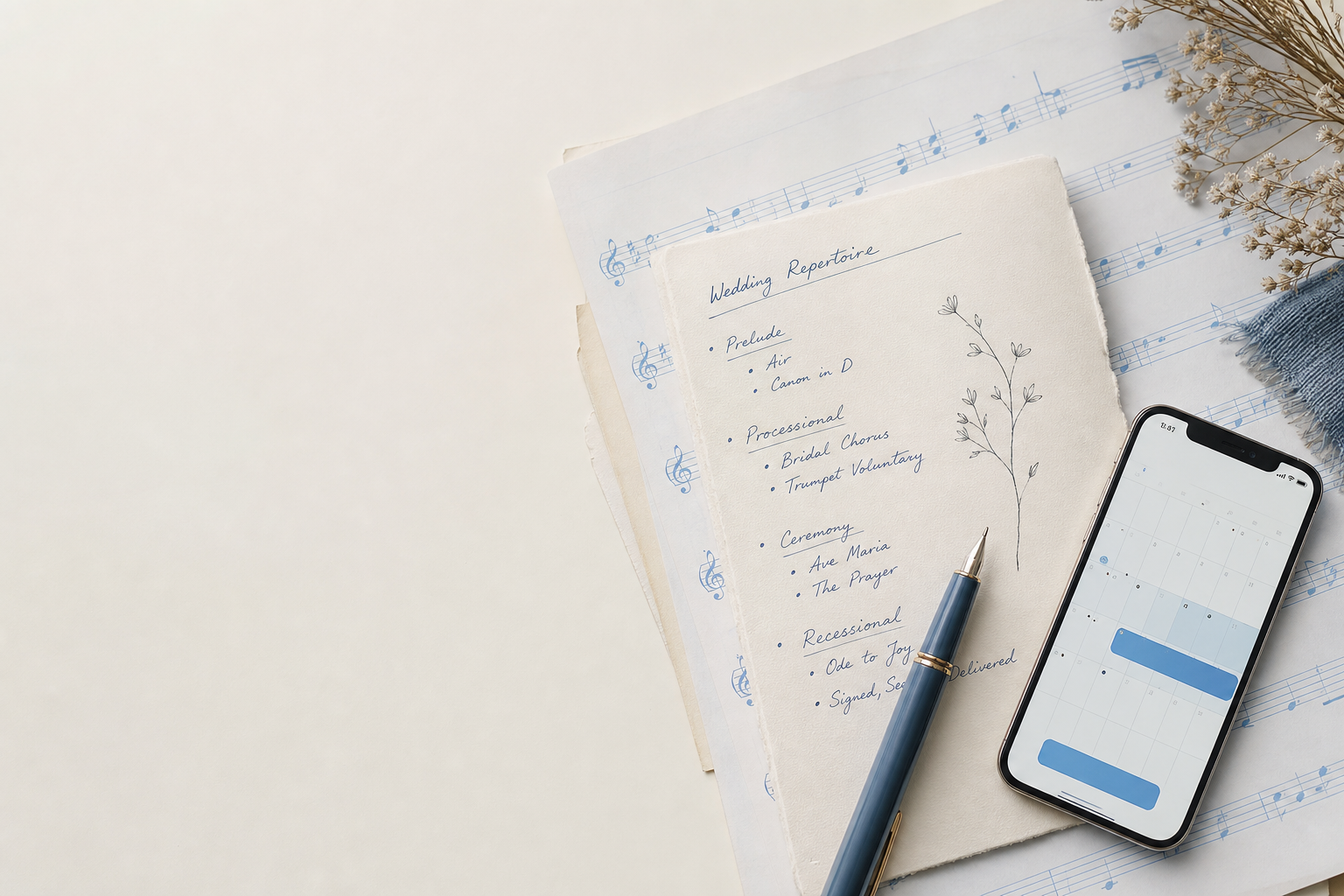
When you contact a musician, the first conversation should cover four things. Ask about availability on your date and their familiarity with your venue or similar venues. Discuss the general shape of their repertoire and their process for discussing music choices. How they answer that last question tells you a lot about whether they are the right fit. A musician who asks what the ceremony needs is a better sign than one who immediately quotes you a fixed package.
Ask to hear recordings, ideally from live performances rather than studio demos. A ceremony musician’s sound in a real room with real acoustics is what you are actually buying. Studio recordings can flatter both the player and the instrument.
Before you sign anything, confirm the practical details. Cover travel and setup time required. Ask whether they bring their own sound equipment if the venue needs amplification, and what happens if they are ill on the day. A professional musician will have answers to all of these without you needing to prompt them.
Get the agreed terms in writing. This protects both of you and removes any ambiguity about what is included in the fee.
Venue Logistics and Technical Considerations
The gap between a ceremony musician who sounds wonderful at an audition and one who sounds wonderful at your actual venue is often a logistics gap, not a talent gap. Getting the practical details right is where the planning pays off.
Start with access. When can the musician arrive to set up? A string ensemble needs more time than a solo guitarist. A harpist needs vehicle access close to the venue entrance. If your venue has restricted access, such as a historic building or a rural outdoor space, confirm with both the venue and the musician that the setup is physically possible before you book.
Amplification is the next question. In a small stone chapel with good natural acoustics, a solo acoustic guitar or strings may need no amplification at all. In a large modern hall with low ceilings and heavy soft furnishings, the same instrument may disappear into the room. Ask the venue what they have found works and what they recommend. Ask the musician what they have used there before, or at comparable venues.
Outdoor ceremonies introduce weather as a variable. High humidity affects string instruments, and direct sun on a piano or harp can cause serious damage. A ceremony musician performing outdoors needs to know the plan for shade and shelter. You need to know what their policy is if the weather makes outdoor performance impossible.
WeddingWire’s ceremony music directory notes that outdoor and rural event logistics are a common reason musicians decline bookings. Some solo musicians will not travel to certain remote locations for safety reasons. Check this specifically when your venue is off the beaten path.
Finally, think about where the musician will be positioned. They need to see the procession clearly to time the music correctly. They also need to be audible to guests without being the visual focus. Work with both the venue coordinator and the musician to find a position that serves all of those requirements.
Solo Ceremony Musician vs. Ensemble: Which One Fits?
This is the question that trips people up most often, because the answer depends on factors that are not always obvious from the outside. Cost matters, but it is not the only variable worth thinking about.
A solo ceremony musician has a real advantage in intimacy. One person performing is immediately personal. There is a direct line between the player and the room. Solo guitar and solo violin share this quality, as does solo voice. The music feels like it is being offered rather than performed. For a smaller ceremony of 30 to 60 guests, a solo performer often fills the space, acoustically and emotionally, better than an ensemble would.
An ensemble, whether a duo or a full string quartet, produces a richer and more complex sound. That sound suits large venues and larger guest numbers. A string quartet in a grand hall at 150 guests sounds right in a way a solo guitar in the same space simply does not. The music needs to reach the back row without strain, and a quartet does that naturally.
There is also a middle ground. A guitar and voice duo, or violin and piano, can offer the warmth of a solo performance with the fullness of two complementary timbres. This format works well in medium-sized venues. It has the added advantage of covering harmonies and countermelodies that a single instrument cannot produce alone.
Budget is a real consideration. A string quartet costs significantly more than a solo ceremony musician. If the choice is between a strong solo performer and a mediocre ensemble at the same price, the solo performer will almost always give you a better day. Quality of playing matters more than number of players. You can read more about what a solo performer brings to a live event at the solo musician Lake Constance page.
Budget Expectations and What Affects the Price
Pricing for a ceremony musician varies considerably. Understanding what drives those differences helps you assess quotes fairly rather than just picking the cheapest option.
A solo ceremony musician at a single-location event typically costs less than an ensemble. Pricing depends on the musician’s experience and the length of the engagement. Travel distance and whether amplification equipment is included also affect the fee. String quartets command higher fees because you are paying four professionals, each of whom has trained for years and has their own equipment to transport.
Published pricing from ceremony music providers illustrates the range. One US-based provider lists a wedding service package for a string quartet at $795, which covers up to 20 minutes of prelude music and 20 minutes of postlude music. That figure is a useful floor reference for ensemble pricing in general-market contexts. Rates in Europe, particularly in Switzerland, will reflect local musician costs and travel logistics.
What typically affects the final price upward: travel beyond a set radius and additional performance time. Requests for complex arrangements requiring prior preparation also add cost, as do late changes to the agreed repertoire. What is often negotiable: package scope and the specific pieces included. The balance between prelude and postlude time can also be adjusted.
Ask any musician you are considering for a clear written breakdown of what their quote includes. “Full ceremony coverage” can mean different things to different people. Knowing exactly what you are getting—hours, phases covered, equipment, and travel—makes comparison straightforward.
According to The Knot’s ensembles and soloists marketplace, ceremony music is one of the wedding categories where couples most frequently report underestimating costs at the planning stage. Setting a realistic budget early and communicating it openly to potential musicians saves time for both sides.
The best way to protect your budget is to book early and communicate clearly. Avoid changing the brief repeatedly once it is set. Repeated changes to agreed repertoire or timing often incur additional preparation fees, and rightly so. A ceremony musician’s preparation time is real work, even if it happens before the day itself.
Frequently Asked Questions
How far in advance should I book a ceremony musician?
For peak wedding season dates, roughly April through October, booking 6 to 12 months in advance is the practical standard. Musicians with strong reputations fill their calendars early. Waiting until 2 or 3 months before your date significantly limits your options.
What is the difference between prelude music and processional music at a ceremony?
Prelude music is the background music played as guests arrive and take their seats, usually starting 20 to 30 minutes before the ceremony begins. Processional music is the specific piece that plays as the wedding party and couple walk in. The two serve different emotional functions and are usually different pieces.
Can a ceremony musician learn a specific song I want that is not in their standard repertoire?
Most experienced ceremony musicians are willing to learn a specific piece on request. They may charge an arrangement or preparation fee if the piece requires significant transcription or learning time. Ask about this early in the booking conversation and confirm the request in writing.
How do I know if a venue is suitable for live music?
Ask the venue coordinator directly what instruments have been used there before and what they recommend. Then ask your potential ceremony musician whether they have performed at that venue or at venues with similar acoustics. Between those two conversations, you will get a reliable picture of what will and will not work.
Is a solo ceremony musician a good option for a large wedding?
It depends on the venue acoustics and whether amplification is available. In a large hall without good natural acoustics, a solo acoustic instrument may not carry to the back rows without a PA system. A solo musician with quality amplification can perform effectively at large weddings. Confirm the technical setup before committing.
If you would like to talk through the music for your ceremony with someone who has spent more than 15 years performing live music at events of all kinds, get in touch here. It is always a good conversation to have early.