A guitarist for corporate events in Switzerland is a solo musician who performs acoustic or amplified guitar music at business gatherings, from gala dinners and product launches to team-building evenings. The short answer is yes, it is worth it — and the difference between a room that hums with real conversation and one that feels like a waiting area often comes down to what is happening with the sound.
Key Takeaways
- A guitarist for corporate events in Switzerland sets the atmosphere before a single speech is delivered, shaping how guests feel from the moment they arrive.
- Acoustic solo guitar works well across a wide range of corporate formats, including networking receptions and executive dinners.
- Live guitar music is adaptable — a skilled guitarist reads the room and adjusts tempo and repertoire to match the energy of the moment.
- Booking a musician with more than 15 years of live performance experience means fewer surprises and a more confident atmosphere on the day.
- Switzerland’s multilingual corporate culture benefits from instrumental music, which crosses language barriers without effort.
By the end of this guide, you will know how to choose the right musician and what questions to ask before signing a contract. You will also learn how to match live guitar music to your specific event format, so you can make a confident decision rather than a hopeful one.
Why Live Guitar Music Changes the Feel of a Corporate Event
There is something specific that happens in a room when a live musician starts to play. Not every sound does it. Recorded playlists keep the silence at bay, but they rarely pull people out of their own heads. A real guitarist, playing in the same physical space, shifts the room’s energy in a way that is hard to explain and easy to feel.
Part of it is attention. Guests arrive uncertain. They scan the room, check their phones, and look for someone they recognise. Live music gives them something to land on. It is not demanding their focus, but it is available, and that availability changes the posture of the whole gathering.
Part of it is tempo. An experienced guitarist does not play at a fixed speed regardless of what the room is doing. When people are still filing in and the energy is tentative, the music can be warm and quiet. When the room fills and conversations start overlapping, the playing adapts. That responsiveness is what recorded music cannot offer.
Live guitar music and events by Martin Schloegl is built on exactly this principle: music at an event should respond to the moment, not just fill the air. After more than 15 years of performing at concerts and private events, the difference between a set that serves a room and one that simply occupies it is something you learn to feel before you can articulate it.
Research from the field of environmental psychology consistently shows that ambient sound affects social behaviour and perceived comfort. The American Psychological Association has published findings linking background music quality to increased social interaction in shared spaces. This is precisely what a corporate networking event depends on.
Corporate Event Formats That Work Well with a Solo Guitarist
Not every corporate event needs the same kind of music, and a solo guitarist is not the right answer for every brief. But the range of formats where acoustic guitar genuinely serves the occasion is wider than most event planners assume.
Networking Receptions and Aperitifs
This is the natural home of solo guitar. Guests are standing, holding drinks, and trying to start conversations with people they may not know. The music needs to be present enough to fill the silence between introductions, but quiet enough not to force people to shout. Acoustic guitar does both at once. A musician who reads the room will keep the volume and tempo calibrated to the crowd’s noise level throughout.
Gala Dinners and Award Evenings
During a seated dinner, live music works in two phases: background music during the meal itself and, optionally, a short feature set between courses. The feature set is where a confident guitarist earns the room’s attention. Two or three songs played with presence, not just as wallpaper, give guests a shared moment before the speeches begin. That shared moment is useful. It is a reset that settles the room and focuses attention.
Product Launches and Brand Events
A product launch often has a specific mood to establish, whether premium or innovative. It might call for a relaxed atmosphere or a celebratory one. A guitarist can be briefed on that mood and play a curated set that supports it before the presentation begins. This is more intentional than a playlist and more flexible than a full band.
Team-Building Evenings and Company Celebrations
These events benefit from warmth. A solo guitarist playing acoustic covers of well-known songs creates a communal feeling without demanding that anyone perform. People hum along and recognise a chorus. They share a small moment of surprise. That is exactly the kind of low-stakes connection a company evening is trying to generate.
Repertoire, Style, and Reading the Room
The question of what a guitarist actually plays at a corporate event matters more than it might seem. A musician who arrives with a fixed setlist and plays it regardless of the room’s response is a very different proposition from one who treats the setlist as a starting point.
For corporate events, the most reliable repertoire sits in the intersection of recognisable and unobtrusive. This means songs guests have heard before, played in arrangements that feel fresh rather than karaoke-adjacent. Think of a jazz-inflected version of a pop standard, or a fingerpicked arrangement of a song that most people know only from its original recorded form.
The style of playing matters as much as the song choice. Fingerpicking creates a lighter, more textured sound that works well in smaller rooms and intimate dinners. Strummed chords with a subtle percussive element work better in larger spaces where the music needs to carry without amplification doing all the work.
Reading the room is the actual skill. An experienced performer notices when conversations are getting louder and raises the energy slightly to stay present. They notice when a section of the room has gone quiet and pulls back to avoid dominating. This is not a formula. It is the kind of musical instinct that comes from years of live performance, not from knowing the right songs.
As a songwriter and singer based at Lake Constance, Martin Schlögl brings both original compositions and a broad acoustic repertoire to corporate events, adapting the set to the specific mood and audience of each occasion.
What to Look for When Hiring a Guitarist for Corporate Events in Switzerland
Finding the right guitarist for corporate events in Switzerland means looking past the demo reel and asking harder questions about experience and adaptability. You also need to consider logistics carefully. Switzerland’s corporate event market is specific, with multilingual audiences and high expectations for reliability. Venues range from converted farmhouses in the Jura to glass-walled conference centres in Zurich.
Experience with Corporate Formats
Wedding gigs and corporate gigs are not the same. A musician who has spent most of their career playing pub sessions or wedding receptions has not necessarily developed the instinct for when to pull back at a product launch. They may not know how to handle a room that is half in conversation and half watching the stage. Ask specifically about corporate experience and listen for concrete examples, not general reassurances.
Reliability and Professionalism
A corporate event runs on a schedule. The musician needs to arrive early and set up without drama. They must complete a sound check without requiring the attention of three event staff and be ready well before guests arrive. These are not small things. Ask about their standard setup time and what their contingency is if something technical goes wrong.
References and Testimonials
Real feedback from real clients is worth more than a well-produced video. Look for testimonials that mention specific details, such as the size of the room and the format of the event. Notice how the musician handled an unexpected situation. Vague praise (“amazing performer!”) tells you less than specific praise (“he read the room perfectly when the dinner ran 40 minutes late and kept the energy right”).
Comparison: Key Hiring Criteria
| Criterion | What to Ask | Red Flag |
|---|---|---|
| Corporate experience | Can you give examples of similar events? | Only mentions weddings or bars |
| Setup logistics | How long do you need for setup and sound check? | Vague or very long setup times |
| Repertoire flexibility | Can you adjust style or volume during the set? | Fixed setlist, no adaptability |
| References | Can I speak to a past corporate client? | Only has self-produced video testimonials |
| Technical needs | What equipment do you bring vs. need from the venue? | Long list of venue-supplied equipment |
Logistics, Setup, and Technical Requirements
A solo guitarist is one of the lower-maintenance live music options available to corporate event planners. That does not mean there are no logistics to manage. Getting them right avoids the kind of last-minute scrambling that eats into setup time and raises everyone’s stress level before a single guest arrives.
Equipment and Sound
A professional guitarist typically brings their own instrument and a small amplifier or acoustic DI box. For smaller events with up to around 50 guests in an intimate room, acoustic guitar without amplification can work well. For larger rooms, a PA system is needed. Clarify early who provides the PA and whether the venue has one that the guitarist can connect to.
Some venues, particularly hotel ballrooms and conference centres, have in-house sound systems that require specific connectors or a liaison with a house sound engineer. Ask the venue about this before confirming the booking, not the day before the event.
Space and Positioning
Where you place the musician affects everything. A guitarist positioned near the entrance creates a strong first impression as guests arrive. A position near the centre of a standing reception space distributes the music more evenly. At a seated dinner, one corner of the room usually works best, present but not dominating.
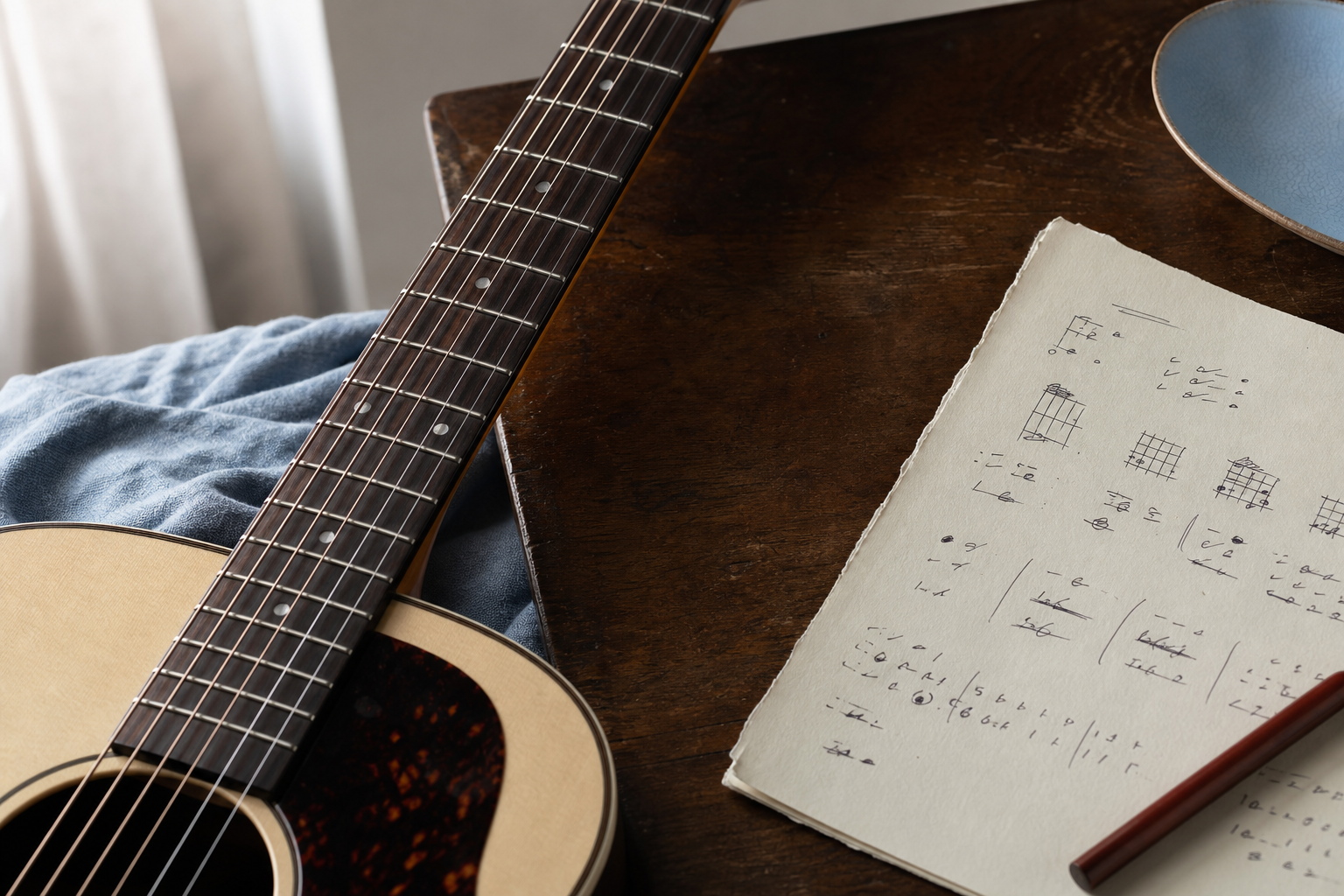
Leave enough physical space around the musician for a chair and a small amp. Include a music stand if needed, and ensure a cable run to the nearest power point. A metre and a half of clear space in every direction is a reasonable minimum.
Timing and Schedule
Agree on arrival time, sound check time, and the start of the first set in writing. A good rule is to have the musician arrive at least 90 minutes before guests do. That leaves time for setup and a proper sound check. It also allows a reset if anything needs adjusting. Build that buffer into your event timeline, not as an afterthought.
Switzerland-Specific Considerations for Corporate Live Music
Switzerland is not a single cultural context. A corporate event in Geneva operates differently from one in Zurich, and both are different from an executive dinner in Lucerne or a team evening near Lake Constance. These differences matter when you are booking a musician, and they are worth thinking through before you finalise anything.
Language and Repertoire
Switzerland’s four language regions each carry their own cultural expectations. In the German-speaking cantons, there is often a preference for music that is warm but unshowy. In French-speaking Switzerland, a slightly more expressive, singer-songwriter quality tends to land well. Instrumental guitar sidesteps the language question entirely, which is one of the practical advantages of a solo guitarist over a vocalist at a mixed-language corporate event.
If your event draws guests from across Switzerland or internationally, an instrumental set is usually the safest and most inclusive choice. A mix of English-language songs that most guests will recognise works equally well.
Venue Types and Acoustic Conditions
Switzerland has an exceptional range of corporate event venues. Stone-walled cellars and lakeside terraces behave very differently acoustically from glass-and-steel business centres. A musician who has performed across the region will have encountered most of them and will know how to adapt.
Outdoor venues near lakes or in mountain settings can have strong ambient noise from wind or water. This is worth discussing with your musician in advance. SUISA, the Swiss music rights society, also administers performance licensing in Switzerland, so check whether your venue requires a SUISA licence for live music. Most do, and the venue often handles it, but it is worth confirming.
Cultural Expectations Around Punctuality
Swiss corporate culture takes punctuality seriously. A musician who arrives late, or whose setup runs over and delays the event start, damages trust immediately. When you are evaluating a guitarist, their track record on punctuality is as important as their musical ability.
Custom Songs and Branded Musical Moments
Some corporate events call for something more specific than a skilled guitarist playing a tasteful set of covers. A product launch or a company anniversary might benefit from a custom composition. An executive dinner celebrating a major milestone could also be the right occasion. This is a piece of music written for that specific occasion, that specific room, and that specific moment in a company’s story.
A custom song does not have to be elaborate. It can be a short instrumental piece that opens the evening, built around a theme or a mood that the client specifies. Or it can be a fully formed song with lyrics that reference the company’s work without turning into an awkward promotional jingle. The difference between those two outcomes depends almost entirely on the songwriter’s craft and their willingness to actually listen to the brief.
This kind of work sits at the intersection of musical skill and genuine interest in the client’s story. It is rare, and it is worth asking about when you are evaluating a musician for a high-stakes event.
Martin Schlögl has been supporting school projects in Bolivia for more than 20 years, helping to provide instruments to communities that would otherwise have none. That long-term commitment to music as something that reaches people, not just entertains them, shapes how he approaches every commission, including custom work for corporate clients.
For event planners who want to go beyond the standard booking, a custom composition is also a practical way to create a moment that guests actually remember. The song exists after the event ends. It can be recorded and shared internally, or used in future communications. That is a different kind of value from a well-played set of covers, and it is worth considering when the occasion calls for it.
Questions to Ask Before You Book
Before you confirm a booking for a solo guitarist at your corporate event, a short list of direct questions will save you from the most common disappointments. Not every musician will answer these comfortably, and the ones who struggle with them are telling you something useful.
About the Music Itself
Ask what styles and genres they are comfortable with, and ask for specific examples. Ask whether they can play without amplification if the venue requires it. Ask how they handle a request for a song they do not know. Can they learn it before the event? How much notice do they need?
Ask about volume. This sounds obvious, but it is one of the most common friction points at corporate events. A guitarist who plays at one volume regardless of the room’s needs will either disappear into the conversation noise or dominate it. You want someone who can genuinely calibrate.
About the Practicalities
Ask what they need from you and from the venue. Power points and a table for equipment need to be confirmed before the day. Parking access and a green room or waiting area are also important to arrange. Ask for their standard contract and read it. A professional musician has one, and it protects both sides.
Ask about cancellation terms. Events change, especially corporate ones. What happens if you need to postpone or cancel? What happens if the musician is ill? A clear answer to both questions is a sign of experience.
About Fit
The last and often most neglected question is whether this person is the right fit for your specific event. A technically excellent guitarist who specialises in blues fingerpicking may not be the best choice for a conservative financial sector dinner. A musician who has spent most of their career playing folk festivals may find a gala dinner in a Zurich hotel lobby disorienting. Fit is not about quality. It is about match.
OECD research on workplace well-being consistently links positive shared experiences, including music, to stronger team cohesion and a more engaged workforce. This is one more reason to get the musical choice right rather than treating it as an afterthought.
Frequently Asked Questions
How much does it cost to hire a guitarist for a corporate event in Switzerland?
Rates vary depending on the duration of the performance and the musician’s experience. The type of event also influences pricing. A solo guitarist in Switzerland typically charges between CHF 500 and CHF 2,000 for an evening event. Custom compositions or longer engagements are priced separately. Always request a written quote that specifies what is included.
How long does a guitarist usually perform at a corporate event?
A standard booking covers two sets of 45 minutes each, with a short break in between. For a networking reception lasting two hours, a single continuous set of 60 to 75 minutes at lower volume often works better. Discuss the event format with your musician and agree on the structure before the day.
Do I need to provide sound equipment for a solo guitarist?
For small events of up to 40 or 50 guests in an intimate room, a professional guitarist can often perform acoustically without amplification. For larger spaces, a PA system is needed. Most professional musicians bring their own amplifier and DI box but may need to connect to a venue PA for larger rooms. Confirm the specifics when you book.
Can a guitarist learn specific songs for our corporate event?
Yes, most professional guitarists can learn specific requests given enough notice, typically two to four weeks for a new arrangement. If your event has a particular theme or you want a specific song for a moment in the programme, raise it early in the conversation rather than the week before the event.
Is live guitar music suitable for outdoor corporate events in Switzerland?
It can be, but outdoor settings introduce acoustic challenges. Wind and ambient noise from water or traffic all pose difficulties, as does uneven sound distribution. A professional musician will know how to adapt, but discuss the outdoor format explicitly before booking. Amplification is usually essential outdoors, and the power source needs to be confirmed with the venue.
If you are planning a corporate event in Switzerland and want to talk through what live music could do for it, get in touch with Martin Schlögl. He is a musician who has spent more than 15 years learning how to read a room and play to it.