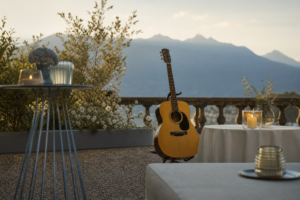
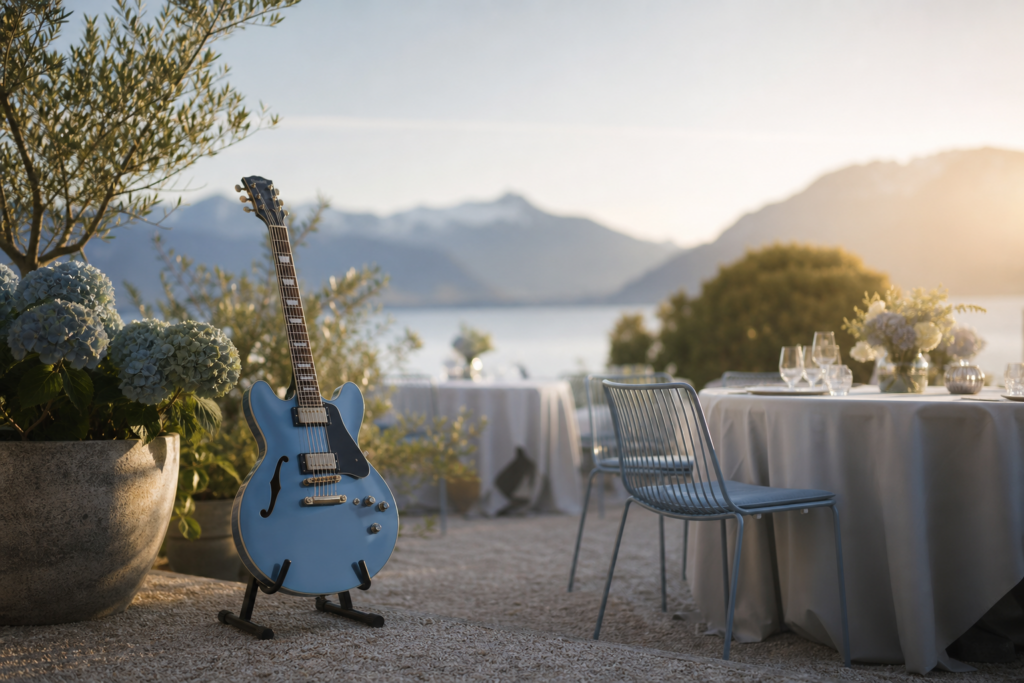
Somewhere between deciding you want live music at your event and actually booking someone, a lot of people get stuck. To hire live music in Switzerland is to open a wide field of options: solo guitarists and cover bands compete for your attention alongside folk ensembles and string quartets. The differences between them matter more than most booking guides admit. Hiring live music in Switzerland means commissioning a real-time performance by a musician or ensemble at your chosen venue, and the format you choose shapes the entire atmosphere of the event from the first note.
Key Takeaways
- Hiring live music in Switzerland covers a wide range of formats, from solo performers to full bands, each suited to different event sizes and budgets.
- Swiss event venues have specific sound and permit requirements that affect which acts you can book and when they can perform.
- Wedding and corporate events in Switzerland benefit most from booking a musician three to six months in advance, especially for summer dates.
- A solo musician or small ensemble often reaches people more directly than a large band in an intimate venue.
- Clear communication about your event’s timeline, space, and guest profile saves both time and money when booking live music in Switzerland.
By the end of this guide, you will be able to compare formats and understand what questions to ask a musician or agency. You will make a booking decision with real confidence rather than guesswork.
Why Live Music Makes a Real Difference at Swiss Events
A playlist never reads the room. It does not slow down when a speech runs long or speed up when the dancing finally starts. It cannot hold a quiet note a beat longer because the couple just exchanged a look worth holding. Live music does all of that without anyone asking.
There is a reason people spend considerably more to hire live music in Switzerland than to rent a sound system and a Spotify subscription. The difference is not about volume or production quality. It is about presence. A musician in the room changes the energy in a way that is difficult to describe but easy to feel within the first two minutes.
According to the World Health Organization’s research on music and wellbeing, shared musical experiences have a measurable effect on social bonding and mood regulation. That is the science behind something most hosts already know intuitively: guests at events with live music tend to stay longer. They talk more and leave happier.
I have been performing live music at concerts and private events for more than 15 years, and the pattern is consistent. People who arrived not knowing each other find a reason to lean in and listen together. That shared attention is not something you can manufacture. You can only create the conditions for it, and live music is one of the most reliable ways to do so.
Switzerland’s event culture also has its own character. Guests here tend to appreciate craft and specificity. A musician who is clearly present and responsive to the room lands differently than one who could be performing anywhere. That specificity is worth seeking out when you book.
Formats to Consider When You Hire Live Music in Switzerland
The format you choose should follow the event, not the other way around. A solo guitarist at an intimate dinner and a cover band at a 200-person wedding reception are both valid answers to the same question. They serve completely different purposes.
Solo Performers and Duos
A solo musician or duo is often the right choice for events where conversation matters as much as atmosphere. Garden parties and corporate dinners benefit from music that supports the room rather than dominates it. Cocktail receptions and ceremonies also respond well to this format.
Solo performers are also easier to fit into unusual spaces. A Swiss farmhouse or a boat on Lake Constance can pose challenges for a full band setup. A terrace overlooking the Alps presents similar constraints. A solo guitarist with a small amp and a microphone can adapt to almost any setting. You can read more about what a solo performance looks like in practice on the Solo Musician Lake Constance page.
Bands and Ensembles
A live band makes sense when you have the space and the budget, and when your guest list wants to dance. Cover bands are the most commonly hired format for weddings and private parties in Switzerland, and there are well over a thousand acts available across the country. The energy of a full band is genuinely different: the rhythm section and the interplay between musicians create something a solo act cannot replicate. The physical presence of multiple performers on a stage adds up to a distinct experience.
String quartets and acoustic ensembles sit between these two options. They work well for ceremonies and drinks receptions where you want presence without amplification. Formal dinners also benefit from their understated elegance.
| Format | Best Suited For | Typical Venue Size |
|---|---|---|
| Solo musician | Ceremonies, cocktail hours, intimate dinners | Up to 80 guests |
| Duo or trio | Receptions, garden parties, small weddings | 50–150 guests |
| Cover band | Wedding receptions, birthday parties, corporate nights | 100+ guests |
| String quartet | Formal ceremonies, corporate dinners, galleries | Any size |
| Folk ensemble | Alpine-themed events, cultural celebrations | Any size |
Hiring Live Music for Weddings in Switzerland
A wedding in Switzerland has its own rhythm, and the music needs to follow it across the whole day. Most couples underestimate how many distinct musical moments a wedding actually contains. The ceremony entrance and the signing of documents need different music than the drinks reception. Dinner has its own atmosphere, and the evening dancing requires something else entirely.
A single artist or small ensemble can cover the ceremony and drinks hour with acoustic sets, then a band can take over for the evening. This split approach is practical and usually costs less than hiring one large band for the entire day. It also means the music can genuinely shift in energy as the day does.
Switzerland’s most popular wedding months are May through September. If your date falls in that window, booking six months in advance is not excessive. The best-known musicians and bands fill their summer calendars early. Leaving it to eight weeks before the date means you are choosing from whoever is left rather than whoever is right for you.
It helps to share specific details when you reach out: the venue, the approximate guest count, and the time of the ceremony. Include any musical references you love or want to avoid. A musician who knows your event is a garden ceremony for 60 people in Zurich at 3 pm will come back to you with far more useful suggestions than one who has been told only that it is a wedding. Specificity gets better results. Always.
For couples who want something truly particular, a custom composition or original song written for the occasion is worth considering. It is not a cheap option, but it is one that guests remember and talk about.
Live Music for Corporate Events and Private Parties
Corporate events in Switzerland have a reputation for precision, and live music is increasingly part of how companies create atmosphere at product launches and annual dinners. Client evenings also benefit from this approach. The brief here is usually very different from a wedding: the music needs to support networking rather than dancing, and it needs to feel appropriate rather than personal.
That does not mean it needs to be bland. A skilled solo musician or jazz duo can hold a room at low volume while people circulate, then shift to something more present when the formal program ends. The key is hiring someone who actually listens to what is happening in the room rather than executing a predetermined set.
Private parties and milestone birthdays sit somewhere between weddings and corporate events in terms of brief. Anniversary celebrations share this middle ground. The host usually has a clear vision of the atmosphere but may not know how to translate it into a musical format. In those cases, a short conversation with the musician before booking is worth more than a long email exchange. You can explain what you want the evening to feel like, and a good musician will tell you honestly whether they can deliver it.
Some agencies and performers also offer branded or thematic sets for corporate clients: music curated or arranged around a product, a brand story, or a specific cultural reference. This is a niche offering but it is available in Switzerland, particularly through larger entertainment agencies with multilingual teams.
Budget expectations for corporate live music in Switzerland are broadly higher than for private events, reflecting venue hire and production requirements. The expectation of a more formal presentation also plays a role. A clear contract that specifies set length and break structure will save misunderstandings on both sides. Include equipment provision and any branding requirements as well.
Swiss Folk and Traditional Music: What It Offers
There is a category of live music in Switzerland that no other country can replicate, and it is worth taking seriously even if it was not your first idea. Traditional Swiss folk music has a directness and warmth that cuts through even the most formal room. This tradition encompasses alphorn and yodelling alongside accordion and hammered dulcimer. Regional song forms are also part of this heritage.
It is not novelty. A well-performed Swiss folk set by musicians who actually live this tradition is a genuine artistic experience, not a costume. The difference between a folk group that is performing authenticity and one that is simply being authentic is obvious within the first song. Swiss guests will notice it immediately.

For international corporate events and incentive travel groups, traditional Swiss music is often the most memorable choice. Cultural celebrations also benefit from this approach. Guests cannot access this music anywhere else. Alphorn players and female vocal trios can perform in a range of lineup sizes, from a solo player at a small dinner to a full ensemble at a conference gala. Accordion-led folk bands offer similar flexibility.
The folk tradition also pairs well with contemporary formats. String arrangements of traditional Swiss melodies work beautifully, and acoustic versions of yodelling standards have their own appeal. A folk-influenced singer-songwriter set can bridge the gap between guests who want something familiar and those who came specifically for the Alpine experience.
If you are considering a Swiss-themed event or an international gathering where local culture is part of the brief, it is worth asking potential musicians about their relationship to the folk tradition specifically. Do not just ask whether they can play it. The answer will tell you a great deal about whether the performance will reach people or simply fill time.
Swiss Venues, Permits, and Sound Rules
Switzerland’s approach to event sound is thorough and worth understanding before you book a musician. Noise ordinances vary by canton and by municipality, and they apply to private events as much as public ones. Getting this wrong late in the planning process can force you to change the musical format entirely.
Sound Limits and Curfews
Most Swiss municipalities enforce an outdoor music curfew between 22:00 and 23:00. Indoor venues have more flexibility but are still subject to decibel limits, particularly in residential areas. Your venue coordinator should be able to tell you the specific rules for your location. Ask explicitly rather than assuming.
For amplified music, some venues require a sound limiter, which automatically cuts output above a set level. This is not necessarily a problem, but it is something your musician needs to know in advance. A band used to playing at high volume in large halls will need to adjust their setup and their expectations for a venue with strict limits.
Performance Rights and SUISA
Switzerland’s music copyright society, SUISA (Swiss Music Authors and Publishers), collects performance royalties for live music events. In most cases, the venue holds a blanket SUISA license that covers live performances. Confirm this when you book your venue. If the venue does not hold a license, the event organizer is responsible for obtaining one. A musician performing only original compositions they own is not subject to SUISA fees, which is one practical reason to consider original artists alongside cover bands.
Stage and Technical Requirements
Ask every musician or band you consider for a technical rider: the document specifying their power and space requirements. It should also cover sound equipment and lighting needs. Swiss venues vary enormously in what they provide in-house. Discovering on the day of the event that your venue does not have the right power supply for a band’s equipment is a problem no one wants. A clear conversation about technical needs, well before the event, is straightforward to have and saves a great deal of stress.
Understanding Costs and Contracts
Pricing for live music in Switzerland is genuinely wide-ranging, and the range reflects real differences in experience and format. What is included in the quote also matters. A solo musician for a two-hour private dinner might cost a few hundred Swiss francs. A full wedding band for an evening, with sound equipment and a support system, can run to several thousand.
What Drives the Price
The main cost factors are the number of performers and the length of the performance. The amount of equipment they bring and the musician’s experience level also matter. Travel costs apply in Switzerland as well: a musician based in Zurich traveling to Geneva for a private event will include that in their quote, and it is reasonable to expect that.
Agency bookings carry an additional fee on top of the artist’s fee, typically between fifteen and thirty percent. That fee covers the agency’s coordination work, which can be valuable if you are organizing a complex event and want someone to manage the musical logistics end-to-end. For a straightforward private booking, going direct to the musician is usually simpler and less expensive.
What Your Contract Should Include
A written contract protects both sides. It should specify the date, the venue, and the performance duration including break structure. The agreed fee and payment schedule belong in there, along with cancellation terms. Clarify who is responsible for equipment. A musician who resists putting these things in writing is a musician worth reconsidering.
Deposits are standard in the Swiss live music market. Expect to pay between thirty and fifty percent upfront to confirm the booking, with the balance due shortly before or on the day of the event. This is normal and not a red flag.
How to Book the Right Act for Your Event
Booking live music in Switzerland is easier when you approach it as a conversation rather than a transaction. The best outcomes come from being specific about your event and honest about your constraints, then listening carefully to what the musician says back.
Start with your brief: the date, the venue, and the expected number of guests. Include the tone you want, whether background and ambient or centerstage and loud. Share your budget range as well. Put all of this in your first message. A musician who can genuinely help you will respond with relevant questions or a clear proposal. One who sends back a generic price list without engaging with your brief is telling you something about how they work.
Ask for video of recent live performances, not just studio recordings. A studio track tells you what a musician sounds like at their best, with editing and production support. A live video tells you how they hold a room and handle a less-than-perfect acoustic environment. It reveals their actual stage presence. Those are the things that matter on your event day.
References from past events are worth asking for, particularly for events similar to yours. A musician who has played many weddings has a different kind of experience from one who mainly performs at corporate events, even if the repertoire overlaps.
If you are near the Lake Constance region, you can learn more about what a working musician’s event schedule actually looks like on the Live Guitar Music and Events by Martin Schloegl page. It gives a real picture of the range of events a solo musician takes on, which can help you calibrate your own expectations.
Finally, trust your instincts in the initial conversation. You are not just hiring a skill set. You are inviting someone into a significant moment, and the way they communicate before the event is usually a reliable indicator of how they will perform on the day. According to OECD research on the cultural and creative sectors, Switzerland has one of the highest concentrations of professional performing artists per capita in Europe. This means you have real choice. Use it carefully.
Frequently Asked Questions
How far in advance should I hire live music in Switzerland?
For summer events, especially weddings, booking three to six months ahead is practical. Popular musicians and bands fill their calendars early in the season. For autumn and winter events, six to eight weeks is usually sufficient. The best acts still book up faster than people expect.
What is a reasonable budget to hire live music in Switzerland for a private party?
A solo musician for two to three hours at a private event typically costs between 500 and 1,500 CHF, depending on experience and travel. A full band for a wedding evening can range from 3,000 to 8,000 CHF or more. These figures vary by region and format. What equipment is included in the quote also affects the total.
Do I need a SUISA license when I hire live music in Switzerland?
In most cases your venue holds a blanket SUISA license that covers live performances of copyrighted music. Always confirm this with your venue before booking. If the venue does not hold a license and the musician will perform copyrighted material, the event organizer is responsible for obtaining one directly from SUISA.
Can a solo musician really fill a large event in Switzerland?
It depends on the event type. A solo guitarist with quality amplification and a strong stage presence can comfortably hold a room of up to 100 people for a cocktail reception or background dinner. For an evening of dancing with 150 or more guests, a band or duo is a better fit. The venue acoustics also matter significantly.
What should I send to a musician when making a first inquiry?
Send the event date, the venue name and location, and the approximate number of guests. Include the type of event and the performance duration you have in mind. Share your budget range as well. The more specific you are, the more useful the response will be. A musician who knows your brief can tell you immediately whether they are the right fit, which saves time for both sides.
If you would like to talk through what live music could look like at your event, get in touch with Martin Schlögl. A short conversation about your event is usually enough to find the right direction.