When a person you love dies, the question of what to play at the ceremony is not a small one. A memorial songwriter in Switzerland is a musician who writes and performs original, custom compositions specifically for funeral and memorial services. That is a different thing entirely from hiring someone to cover a famous song, and the difference is something most people feel before they can explain why.
Key Takeaways
- A memorial songwriter in Switzerland writes original, custom compositions for funeral and memorial ceremonies, rather than performing standard cover songs.
- Custom memorial music is written around the specific life of the person being remembered. It also reflects their relationships and personality, and cannot be pulled from a playlist.
- Live acoustic performance at a memorial service creates a different emotional quality than recorded music played through speakers.
- Switzerland has a developed singer-songwriter culture, supported by events like the Songbird Festival Davos and platforms connecting musicians to event organizers.
- When choosing a memorial songwriter, the most important factors are their experience with grief-sensitive settings and their willingness to collaborate closely with the family.
By the end of this guide, you will know what to ask a musician before booking them and what the creative process for a custom memorial song looks like. You will also learn how to judge whether a particular artist is the right fit for your ceremony.
What Memorial Songwriters Actually Do
A memorial songwriter does not show up with a set list. They sit with a family, listen to stories, ask about the person who died, and then write something that belongs only to that ceremony. The song becomes a record of a life, not a placeholder for one.
The practical work involves gathering details: the deceased’s favorite places and the way they laughed. The songwriter asks about things the person was proud of, along with the relationships that shaped them. These details go into lyrics and melodic choices that a stranger in the room might not fully understand, but the family recognizes immediately. That recognition is the point.
At the service itself, the songwriter performs the piece live. Some memorial songwriters also offer to record a finished version for the family to keep afterward. That recording is not the main event; the live performance in the room, on the day, is what carries the weight.
It is worth noting that memorial songwriters are distinct from general funeral singers. A funeral singer might perform a selection of hymns or classical pieces beautifully. A songwriter brings something that did not exist before the family asked for it. Both have real value, but they are not the same service. The distinction matters when you are deciding what kind of ceremony you want.
Why Custom Music Matters at a Memorial Service
A song written for one specific person does not sound like a song chosen because it seemed to fit. You can usually sense the difference before you could explain it, the way you can tell a handwritten letter from a printed one before you have read a single word.
Standard repertoire has a role, and nobody is arguing against it. But when a lyric lands on a detail that only the people in that room would know, something shifts in the air. A nickname or a particular kitchen can do this. So can a habit that drove everyone mad and that everyone now misses. That shift is not a theatrical trick. It is recognition, and recognition at a memorial is a form of comfort that little else can replicate.
Grief researchers have long observed the role of music in processing loss. Pro Helvetia, the Swiss Arts Council, acknowledges music as a primary carrier of cultural memory and emotional identity, which helps explain why memorial music carries so much practical weight in ceremony design.
A custom composition also gives mourners something concrete to hold onto afterward. The song can be shared with people who could not attend, and it can be played on anniversaries. It becomes, in a quiet way, part of how the family carries the person forward. A playlist track, however beautiful, does not do that in the same way.
Custom memorial music is also not about sentimentality for its own sake. A good memorial songwriter will ask what the person was actually like, including the difficult parts. Songs that idealize are sometimes what families want, and that is a valid choice. But the most affecting memorial music tends to be honest about the whole person, not just the version everyone agreed to present at the service.
The Singer-Songwriter Culture in Switzerland
Switzerland has a more developed singer-songwriter tradition than its size might suggest. The country has produced well-regarded artists including Sophie Hunger and Stephan Eicher. Gjon’s Tears and Luca Hänni also emerged from this tradition, working as original songwriters rather than interpreters of other people’s material.
The Songbird Festival Davos, founded in 2008, is Switzerland’s largest festival dedicated entirely to singer-songwriters. It runs annually in December and gives a platform to both emerging Swiss artists and established figures who write and perform their own music. The festival’s continued growth says something real about the appetite for original songwriting in the country.
The German-speaking part of Switzerland, in particular, has a tradition of personal, story-driven songwriting. It is rooted partly in the Swiss dialect folk tradition and partly in the broader European singer-songwriter movement of the 1960s and 1970s. Artists like Mani Matter, who wrote in Swiss German dialect, are still widely referenced as touchstones of authenticity in local music culture.
This cultural foundation matters when you are looking for a memorial songwriter. Switzerland is not short of musicians who understand the tradition of writing from personal experience rather than for commercial appeal. That orientation, writing toward honesty rather than toward mass appeal, is exactly what a memorial commission requires. The Swiss singer-songwriter scene, for all its variety, tends to value specificity over spectacle. That is a useful instinct in grief-sensitive work.
Platforms like MX3, the Swiss music platform, catalog independent Swiss musicians and are a practical starting point for identifying songwriters who work in the acoustic and original music space. They allow you to hear actual recordings and assess whether a musician’s voice and style is right for your ceremony before you make contact.
Live Music Versus Recorded Music at a Memorial
Playing a recording through a speaker system is not the same as having a musician in the room. That is not a romantic notion; it is a practical observation about how people experience sound in shared emotional spaces.
Recorded music, however well chosen, is fixed. It was recorded on a different day, in a different room, for reasons that had nothing to do with the person you are honoring. The mourners in front of you are real and present, and the music coming from the speakers is not. There is a slight mismatch between those two facts, and most people feel it even when they cannot name it.
A live performance breathes with the room. A musician can slow a phrase when the emotion in the space calls for it. They can hold a note or release one depending on what the moment needs. Recorded music cannot read a room. A live memorial songwriter can, and that responsiveness is part of what the family is paying for.
Live acoustic music also carries a different physical quality. A guitar played in an intimate space, or a voice without amplification in a chapel, fills the air in a way that a speaker never quite matches. The sound has presence: it occupies the room rather than projecting into it. For a memorial service, where presence is exactly what has been lost, that quality matters more than it might at a corporate event.
For anyone exploring what live acoustic performance looks like in practice, the work described on the Solo Musician Lake Constance page gives a concrete example of how an acoustic solo musician approaches intimate and ceremonial settings.
How a Memorial Songwriter Creates a Custom Song
The process usually begins with a conversation, not a form. A good memorial songwriter will want to talk with the family, ideally with two or three people who knew the deceased from different angles. This matters more than speaking only with the person organizing the ceremony. A partner of forty years will remember different things than a close friend from work, and both of those perspectives feed into a richer song.
The songwriter listens for specifics rather than generalities. What did the person love? Where did they feel most at ease? What was their sense of humor like? Were there phrases they used repeatedly, or places they returned to? These concrete details are what separate a custom memorial song from a generic tribute piece.
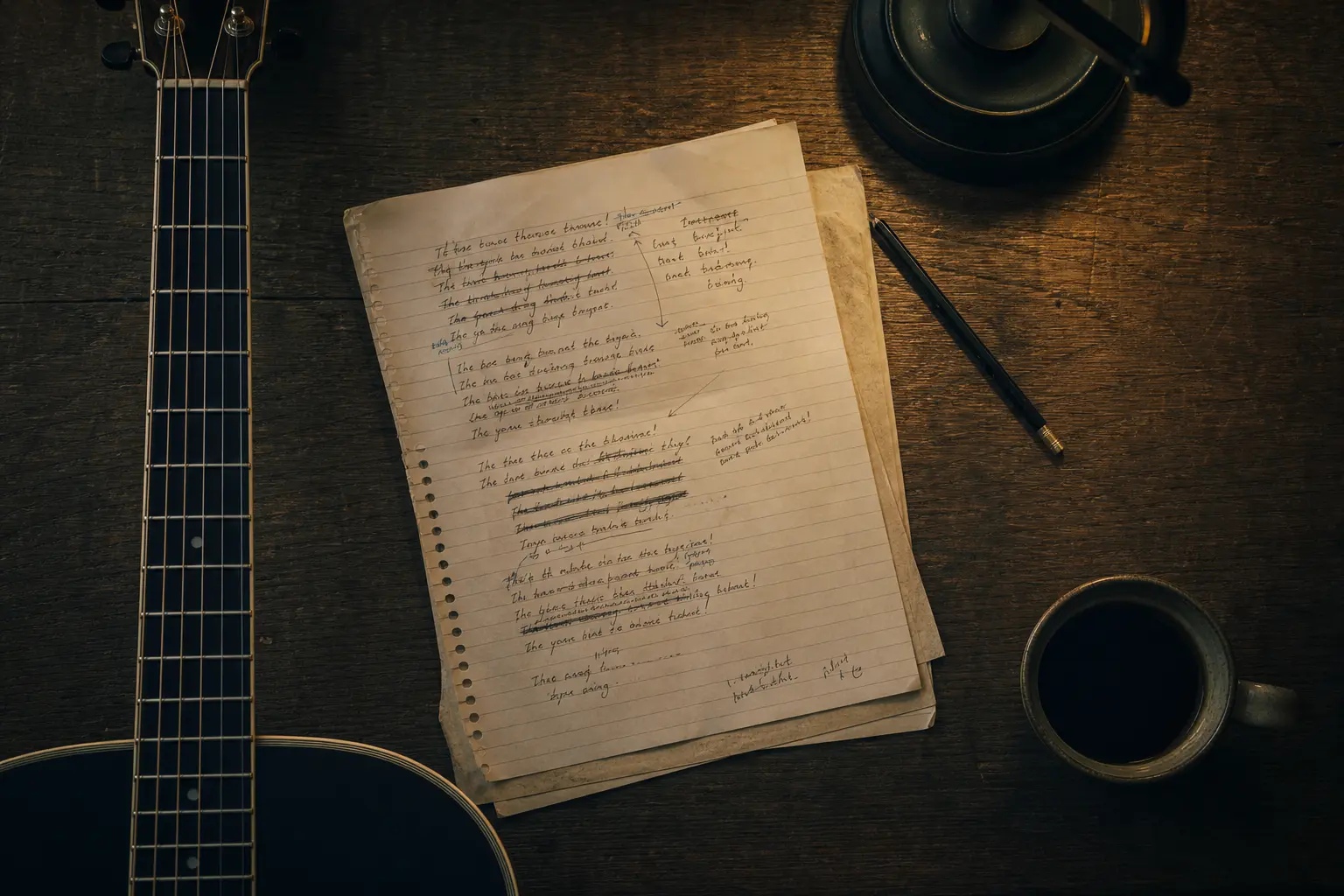
After the initial conversation, the songwriter works on a draft, usually returning to the family with lyrics and a rough melody before the final version is set. This collaborative revision stage is important. Families sometimes realize in the second conversation that the first draft captured something real but missed something equally important. A songwriter who is comfortable with that revision process is a better fit for memorial work than one who presents a finished piece and considers the job done.
The performance itself is then rehearsed specifically for the acoustic and physical conditions of the venue. Whether that is a chapel, a crematorium, a garden, or a private home, the setting changes everything about how a song needs to be delivered.
Having performed live at events for more than fifteen years, including intimate private settings where the emotional stakes are high, informs how a musician prepares for memorial work. Experience with real rooms and real audiences, not just rehearsal spaces, is what allows a performer to adjust on the day when something unexpected shifts in the atmosphere.
What to Look for When Hiring a Memorial Songwriter
The most important question is not whether a musician is technically skilled. It is whether they have experience working in grief-sensitive settings and whether they are comfortable taking direction from a family rather than performing their own artistic vision.
Ask to hear examples of original songs, not just cover performances. A memorial song will be an original composition, so you need to hear how a musician writes, not just how they sing. Ask specifically whether they have written memorial pieces before and whether they can describe the process they used.
Consider the following when comparing your options:
| Factor | Why It Matters |
|---|---|
| Original songwriting experience | A cover performer and a composer are different skills; memorial work requires both |
| Willingness to collaborate with the family | The song should reflect the family’s vision, not only the artist’s |
| Experience in intimate or ceremonial settings | Acoustics, emotional atmosphere, and pacing differ greatly from concert venues |
| Availability for a revision conversation | First drafts rarely capture everything; a revision stage is a quality signal |
| Ability to record a keepsake version | A recording gives the family something to keep and share after the service |
Also pay attention to how the musician communicates during your initial inquiry. Are they asking about the person who died, or are they focused mainly on logistics and fees? Both matter, but the order in which they ask tells you something about their priorities.
A musician who has spent time in school projects or community settings, anywhere that required genuine listening rather than performance, is often better suited to memorial work than a concert performer who has rarely played for a small, emotionally invested audience. The skills overlap, but they are not identical.
Practical Logistics: Booking, Costs, and Preparation
Booking a memorial songwriter in Switzerland typically requires more lead time than booking a standard musician for an event. The custom composition process needs time, usually a minimum of two weeks from the initial conversation to the finished piece. Ideally longer if the family wants a revision stage.
Costs vary depending on the musician’s experience and whether the commission includes a recorded keepsake version. Based on publicly available booking platforms in Switzerland, live acoustic performances for private ceremonies start from around CHF 500 for established musicians. Custom composition fees are added on top of the performance fee. Some musicians package both together; others price them separately.
When you make contact, be ready to share basic information about the person who has died, along with the date and location of the service. Also mention the expected size of the gathering and whether you want a recording afterward. The more specific you can be at this stage, the faster the creative process can begin.
It is also worth discussing the acoustic setup of the venue in advance. A solo acoustic guitarist in a small chapel needs no amplification. The same musician in a larger hall may need a simple sound system, and that affects both logistics and cost. Some musicians bring their own equipment; others require the venue to provide it.
Plan the performance position and timing within the ceremony carefully. Memorial songwriters can perform at the opening of a service or during a quiet reflective pause in the middle. Some choose to perform at the close instead. Each position carries a different emotional weight, and your chosen musician should have a view on which placement would serve the song best. For more on how live music fits within event programming, the Live Music Events page offers practical context.
Finding the Right Memorial Songwriter in Switzerland for Your Ceremony
There is no directory that lists only memorial songwriters in Switzerland, which means the search often starts in a broader place. Musician booking platforms and music school networks are useful starting points. Word of mouth from funeral directors who have worked with live musicians before can also help.
MX3 and similar platforms let you hear a musician’s recorded work before reaching out. Listen specifically for original songs, not just covers. Notice whether the lyrics deal with personal and emotional subject matter, or whether the writing stays at a surface level. A songwriter who writes from personal experience tends to be better equipped for memorial work than one whose catalog is primarily upbeat commercial material.
Regional music communities around Lake Constance and the German-speaking cantons have a number of acoustic songwriters who work across Switzerland and who have experience with private, grief-sensitive events. This geographic area has a long tradition of small-venue acoustic performance that translates naturally to ceremonial settings.
When you find a musician who seems right, ask for a short call before committing. How they talk about their work, whether they describe it in terms of the audience’s experience or their own performance, tells you a lot. A memorial songwriter in Switzerland who is right for your ceremony will focus the conversation on the person being remembered, not on their own catalog.
If you want to hear what a songwriter’s approach to original, personal music sounds like before making contact, exploring recorded work is always the most direct path. The page covering Songwriter and Singer Lake Constance gives a sense of how this kind of work is approached from a compositional standpoint. Authenticity in songwriting, much like in a ceremony itself, is something you hear rather than read about.
FAQ
How far in advance should I book a memorial songwriter in Switzerland?
Aim for at least two to three weeks before the ceremony. The custom composition process involves an initial conversation and a draft, usually followed by a revision stage before the piece is ready for performance. If the service is soon, contact musicians immediately and explain the timeline. Some are able to work faster when circumstances require it.
What information does a memorial songwriter need from my family?
They will want to know about the person’s life: the places they loved and their relationships. They will also ask about humor and habits, along with the things that made them specific rather than general. The more concrete and personal the details, the more the finished song will reflect who the person actually was rather than a generic idea of loss.
Can a memorial songwriter also provide a recording of the song for the family to keep?
Many memorial songwriters offer a recorded version as part of their service. This may be a studio recording made before the ceremony or a live recording made on the day. Ask about this specifically when you make your initial inquiry, as it affects both the logistics and the cost of the commission.
Is live memorial music suitable for small, private gatherings as well as larger services?
Live acoustic music works particularly well in small, intimate settings. A solo guitarist or singer-songwriter does not need a sound system in a small room, and the lack of amplification makes the performance feel more present and immediate. Larger venues may require simple amplification, which a good musician will manage as part of their preparation.
How much does a memorial songwriter in Switzerland typically cost?
Performance fees for acoustic musicians in Switzerland start from around CHF 500, based on publicly available booking platforms. A custom composition adds to that cost. The total varies depending on the musician’s experience and whether a recorded keepsake is included. Travel distance to the ceremony venue also affects pricing. Always confirm the full fee in writing before the booking is confirmed.
If you are looking for an acoustic songwriter with experience in intimate and personal settings, get in touch to talk through what your ceremony needs and how a custom composition could take shape.