Some musicians write songs. Others create entire spaces for reflection, connection, and change. I have always wanted to be the second kind.
In a music industry often dominated by trends, algorithms, and the endless pressure to remain visible, I try to do something different. Not because I am unaware of how the industry works, but because I have never been able to create honestly from that place. My music is not primarily about entertainment or performance. It is an invitation. A quiet but deliberate invitation to slow down, listen carefully, and reconnect with emotions that modern life so often pushes aside.
Storytelling That Goes Beyond the Stage
Through acoustic storytelling, lyrics that mean something, and a deep belief in the communal nature of music, my work reaches beyond conventional definitions of what a musician does. My songs are not trying to fill silence. They are trying to create atmosphere, encourage reflection, and open emotional spaces where people can feel genuinely present again. From intimate guitar compositions to collaborative creative projects, I explore themes of trust, courage, vulnerability, and the complexity of human experience. Not because those are interesting subjects, but because they are the ones I keep returning to in my own life.
What I care most about is sincerity. In much of contemporary music, production and image overshadow emotional substance. Listeners receive polished perfection but very little depth. I try to move in the opposite direction. Rather than constructing distance between myself and the people listening, I try to create closeness. Accessibility, groundedness, honesty. Not as a strategy, but because it is the only way I know how to do this work.
The Courage to Be Vulnerable
That emotional honesty requires something I have had to practice: vulnerability. In modern culture, people are constantly encouraged to appear confident, productive, and emotionally controlled. Social media rewards curated perfection while making it difficult to be openly uncertain or complex. My music tries to offer an alternative. Not because vulnerability is fashionable, but because it is real. And real things connect people.
When I write a song that touches something difficult or uncertain, I am not trying to be dramatic. I am trying to be honest. And what I have found, over many years of performing, is that honesty reaches people in ways that polished perfection does not. Listeners feel it. They recognise something in the music that belongs to them too. That recognition is, for me, what music is for.
Simplicity as Depth
One of the things I am most committed to in my work is simplicity. Not because I lack ambition, but because I genuinely believe that the quietest moments often carry the strongest emotional weight. Acoustic melodies, carefully chosen lyrics, thoughtful arrangements. Space for silence and reflection. I am not interested in overwhelming people. I am interested in giving them somewhere to go inside themselves.
This simplicity is sometimes mistaken for restraint. But beneath it is something I work hard at: the ability to say a great deal without saying too much. To leave room for the listener’s own interpretation, their own memories, their own meaning. The best moments in my performances are not the ones where I play the most. They are the ones where the music and the person listening find each other.
Music as Community
Beyond songwriting and performance, my commitment to community is one of the most important parts of what I do. I have never seen music as primarily a vehicle for individual recognition. For me, it is fundamentally relational. Something that happens between people, not just in front of them.
This becomes visible in my collaborative projects and in the guitar lessons I give. Whether teaching, mentoring, or creating together with other musicians, I try to prioritize connection over ego. Music is not a competition for attention. It is a shared experience capable of bringing people genuinely closer together.
That matters enormously right now. Despite unprecedented digital connectivity, many people feel deeply isolated. Conversations are shorter, attention is fragmented, and genuine emotional presence is becoming rare. Art that encourages authentic human interaction is therefore not just culturally valuable. It is necessary. I try to create that kind of space in everything I do.
Teaching as an Extension of Music
Teaching plays an important role in my broader artistic life. I give private guitar lessons, and I have come to understand that teaching music is about much more than technical instruction. It is about encouraging confidence, emotional expression, and creative curiosity. Helping someone discover their own voice, both as a musician and as a person, is one of the most meaningful things I do.
The connection between teaching and performing is something I think about often. Both involve communication. Both require listening deeply and responding honestly. And both, when they work, create moments where something shifts in the other person. That shift is what I am always working toward, whether I am on a stage or sitting across from a student with a guitar.
Atmosphere Over Intensity
One of the things I am most interested in as a musician is atmosphere. Not technical brilliance or dramatic intensity, but the emotional environment that surrounds a piece of music. I want listening to my work to feel calming, spacious, and emotionally present without being heavy.
Modern life rarely gives people time to pause and reflect. Constant notifications, rapid information cycles, and social pressures create a kind of mental exhaustion that most people carry quietly. Music that encourages stillness and mindfulness can be genuinely restorative. I try to create that kind of breathing room in my compositions. Not by telling people what to feel, but by giving them the space to feel honestly.
Trust as a Foundation
Trust is a recurring theme in my work, and not by accident. Trust in oneself, trust in the creative process, trust in other people, trust in emotional honesty. These are not abstract values for me. They are things I have had to learn, sometimes the hard way, and that I keep coming back to in my music and in my life.
My album Trust and Devotion, released in 2020, came from this place. The title was not a concept. It was a description of where I was and what I believed. That music can be an act of devotion. That showing up honestly, again and again, is its own form of courage. And that trust, between artist and listener, between collaborators, between a performer and a room full of people, is what makes music matter.
Authenticity in a Digital Age
There is something both timeless and urgently contemporary about the approach I try to take. Contemporary audiences are increasingly searching for authenticity and emotional depth in the art they consume. Many people feel exhausted by superficial content and performative culture. Artists who communicate sincerity therefore stand out not because they are unusual, but because they are offering something people have been quietly missing.
I am not trying to position myself as a counterculture figure. I am simply trying to create work that feels real. Music made not to attract attention but to communicate something meaningful. That distinction changes the listening experience. It transforms passive entertainment into genuine emotional engagement. And that transformation is what I am always working toward.
Reflection as a Form of Resistance
Reflection is becoming increasingly rare in fast-paced digital culture. People are encouraged to react instantly rather than think deeply. In this context, music that encourages contemplation carries a particular kind of cultural value. My songs often create moments where listeners can reconnect with their inner lives, their memories, and their emotions. Not because I design them to do that, but because honest music tends to find its way there naturally.
What I hope people take from my music is not a particular feeling or message. I hope they take space. Permission to slow down, to feel something without immediately having to explain it, to remember that they are more than what they produce or perform in a given day.
Honesty and Hope Together
One thing I want to be clear about: my music is not pessimistic. It explores vulnerability and complexity, but it also carries warmth and, I think, a quiet kind of hope. I believe in connection. I believe in the capacity of people to listen to each other and to be moved by what they hear. I believe that music still has the power to build bridges between people who might otherwise remain strangers.
That belief is not naive. It comes from experience. From playing in living rooms and at memorial services and at weddings and in concert halls, and watching music do something that nothing else quite manages: reach people exactly where they are, without asking them to be anywhere else.
An Invitation
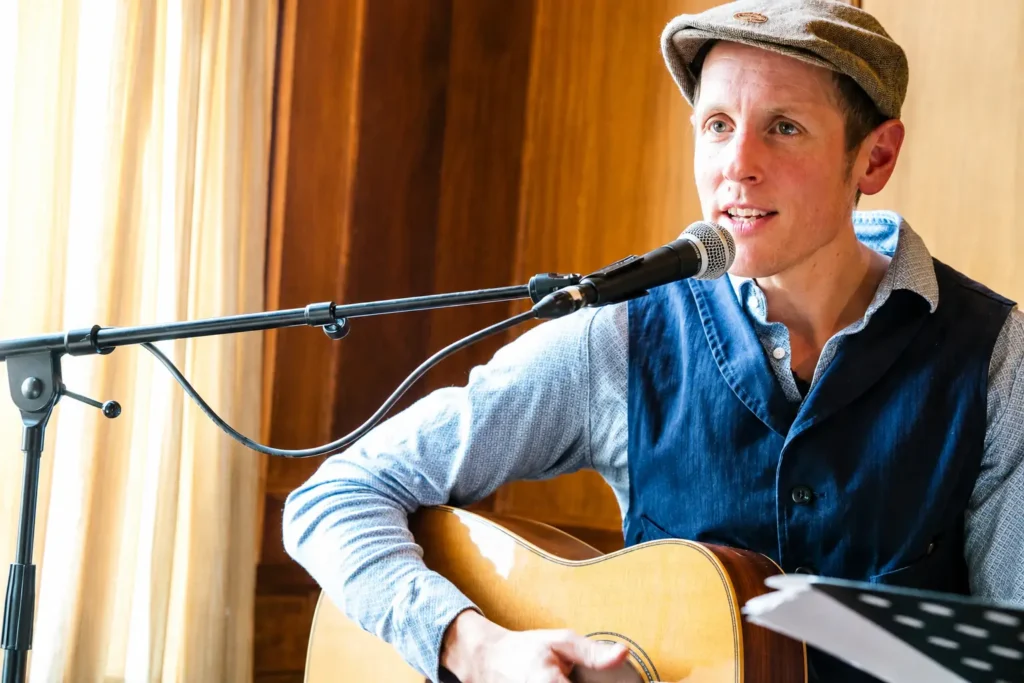
If you have not yet encountered my music, I would like to invite you to listen. Not because I think you should, but because I genuinely believe it might offer you something. A moment of stillness. A recognition of something you already knew but had not found words for. A reminder that authentic connection, between a musician and a listener, between one person and another, is still possible.
That is what I am offering. Not a product, not a persona, not content. A conversation. And I hope, somewhere in that conversation, you hear something that belongs to you.