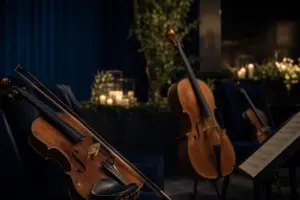

Picture a summer evening by the water. The light is doing that thing it does around six o’clock, where it turns everything gold, and the conversation at the tables around you has stopped being polite and started being real. What changed the room? Often, it is a singer and guitarist in Lake Constance, Switzerland playing twenty metres away, quietly enough that no one had to raise their voice. A singer and guitarist in Lake Constance, Switzerland is a solo live music performer who plays acoustic guitar and sings original songs or carefully chosen covers, without a backing band or a laptop running click tracks. The work is spare and direct. That is exactly why it lands.
Key Takeaways
- A singer and guitarist in Lake Constance, Switzerland performs solo acoustic live music at private events and public concerts. Outdoor venues around the Bodensee region are particularly well suited to this format.
- Martin Schlögl is a Lake Constance-based singer-songwriter with more than 15 years of live performance experience at concerts and private events.
- Acoustic solo performance works without a PA system in smaller spaces and adapts easily to outdoor settings by the lake.
- The region’s geography, shared between Germany and Austria along with Switzerland, gives local performers a wide range of venues and event types to work with.
- A live acoustic performer creates an atmosphere that a playlist cannot replicate, because the music responds to the room in real time.
By the end of this article you will know what to look for in an acoustic solo performer around the Bodensee and how to decide whether live music fits your event. You will also understand why the choice of performer matters as much as the choice of venue.
What Defines a Singer-Guitarist as a Live Performer
A singer-guitarist is not simply someone who can do two things at once. The craft is specific: writing or interpreting songs in a way that holds an audience with no other musicians in the room and no production layer. There is no safety net of volume to cover mistakes.
The guitar in a solo acoustic act does everything a full arrangement would normally split across instruments. It keeps the rhythm and carries the harmony. Sometimes it provides melodic fills between vocal lines. That demands a particular kind of musicianship, one built over years rather than assembled for an occasion.
Good singer-guitarists also read the room. The set list that worked at a winery dinner last Saturday may not work at a garden party this Sunday. The tempo shifts, and the mood shifts. An experienced performer notices before the audience does. That responsiveness is actually what separates a live acoustic act from a carefully curated playlist. The music bends toward the people in the space rather than playing past them.
Original songwriting adds another layer. When a performer plays songs they wrote themselves, the relationship between the music and the words is cohesive in a way that cover sets rarely achieve. You can hear it in the phrasing. The lyrics fit the melody because the same person built both. That coherence is one of the reasons original acoustic music tends to hold a room differently than a cover act does.
The technical demands should not be understated either. Coordinating fingerpicking patterns with melodic singing requires sustained practice. Adjusting dynamics in real time is another skill that takes years to develop, as does projecting clearly in an outdoor space without the support of a large PA system. A performer who has been doing this for more than 15 years carries a different kind of reliability than someone who is still finding their stage presence.
Lake Constance as a Setting for Live Acoustic Music
Lake Constance, known locally as Bodensee, sits where Germany meets Austria and Switzerland. That geography gives the region a cultural density unusual for a lake surrounded by relatively small towns. The Swiss shore alone spans the cantons of St. Gallen and Thurgau, along with Schaffhausen. Each has its own event calendar and its own cluster of wineries, estates, and public spaces that regularly host live music.
The landscape matters. Open-air events near the water carry a particular acoustic quality: sound travels cleanly across the surface, and there is usually a natural amphitheatre effect along sloped shorelines. The ambient noise level is low enough that a single acoustic guitar can hold its own without amplification in smaller gatherings. That is not something you can say about an urban event space, where street noise and HVAC systems compete with a performer constantly.
The region also has a tradition of cultural programming. According to Bodensee.eu, the international Lake Constance tourism portal, the lake area hosts a wide range of cultural events across its three bordering countries, drawing audiences who value outdoor experience alongside live performance. That existing audience appetite makes acoustic live music a natural fit rather than a novelty.
Seasonally, the window for outdoor performance around Lake Constance runs from late spring through early autumn. That stretch covers garden parties and vineyard evenings. It also includes lakeside festivals and wedding receptions held in the open air. Each of those contexts benefits from a performer who can adjust to changing light levels and shifting wind conditions. Audiences that move around rather than sitting still in rows present their own considerations.
The combination of natural setting and cross-border cultural energy makes the Bodensee one of the more interesting places in German-speaking Europe to work as a solo acoustic musician. The audiences are mixed, and the venues are varied. The settings are rarely generic.
Martin Schlögl: Singer and Guitarist in Lake Constance, Switzerland
Martin Schlögl is based on the Swiss side of Lake Constance and has been performing live for more than 15 years. His music is written primarily on the guitar and moves between the contemplative and the lively. His compositions sit somewhere between original acoustic songwriting and purely instrumental pieces that let the sound carry the meaning without words.
His songs invite reflection. That is not a marketing description. It is actually what happens when you listen carefully. The arrangements are spare enough that there is space inside them. Silence is used deliberately. A note is allowed to decay before the next phrase begins, which gives his music a quality of patience that is increasingly rare in live performance contexts.
Martin is also a guitarist who teaches. He offers private guitar lessons for children and adults around Lake Constance, which means his understanding of the instrument goes beyond performance. Teachers notice things about technique and musical structure that pure performers sometimes miss, because they have had to articulate what they do rather than simply doing it.
His favourite quote, from Howard Thurman, is worth sitting with: “Don’t ask what the world needs. Ask yourself what makes you come alive and do exactly that. Because what the world needs is more people who have come alive.” That orientation shows up in the work itself. The performances feel chosen rather than executed.
You can find more about his approach and the breadth of his work on the Songwriter and Singer Lake Constance page, which gives a fuller picture of how he positions his music between events and concerts.
Martin has also supported two school projects in Bolivia for more than 20 years, helping provide instruments to children there. That detail says something about what music means to him outside of performance contexts. It is not a credential. It is a direction.
What Events Actually Suit Acoustic Solo Performance
Not every event needs a band. In fact, a full band at the wrong event can work against the atmosphere the host is trying to create. Too much volume in an intimate setting overwhelms conversation. Too much setup time for a three-hour garden party disrupts the schedule. Sometimes the occasion calls for something quieter and more focused.
Acoustic solo performance works especially well at private dinners where conversation is the point. The music fills the background without dominating it. Guests can hear each other across the table, which sounds obvious until you have attended a dinner where the music was too loud and watched the conversation die.
Wedding receptions on the Swiss side of Lake Constance are a natural context. The ceremony atmosphere carries into the cocktail hour, and a solo acoustic guitarist maintains that feeling without a jarring shift in energy. The music is present without being an event in itself, unless the couple wants it to be. In that case, a focused acoustic set during dinner works differently from background playing.
Vineyard events and corporate gatherings in outdoor venues also suit this format well. The setup is minimal: a chair and a guitar, sometimes a small amplifier for larger outdoor spaces. That simplicity is an advantage when the venue has limited power access or when the host wants the visual aesthetic to stay clean.
Cultural festivals along the Bodensee frequently book solo acoustic acts for afternoon slots, where the volume of a band would clash with neighbouring stages or with the general noise level of a daytime crowd. A guitarist who can hold an audience in that context, without amplification competing with the environment, is genuinely useful to festival programmers.
For anyone planning an event around Lake Constance and curious whether live acoustic music fits, the Live Music Events page gives a practical overview of the kind of settings and occasions Martin works with.
Acoustic Solo Act vs. Full Band: When Each Makes Sense
The honest answer is that neither format is universally better. Each suits different conditions, and the mistake most event planners make is treating the choice as a matter of budget rather than a matter of fit.
A full band brings energy and volume, along with the social permission to dance. If your event has a dance floor and guests who want to use it, a solo acoustic act will frustrate everyone, including the performer. Bands are also better at filling large outdoor spaces where sound needs to carry across a wide area without the intimacy of a focused acoustic setup.
| Factor | Solo Acoustic Act | Full Band |
|---|---|---|
| Ideal space size | Intimate to mid-size | Mid-size to large |
| Setup time | 15–30 minutes | 60–120 minutes |
| Volume level | Low to moderate | Moderate to high |
| Conversation-friendly | Yes | Rarely |
| Dance floor ready | Not typically | Yes |
| Outdoor adaptability | High | Requires PA and power |
What the table does not capture is the qualitative difference in atmosphere. An acoustic solo performer creates a specific kind of attention in a room. People lean in. They listen differently. That effect is harder to achieve with a full band, where the overall sound tends to wash over an audience rather than reach individual listeners.
For events where atmosphere and conversation matter as much as entertainment, the solo acoustic format is often the more considered choice. It is not a budget compromise. It is a different tool for a different job.
What to Listen For When Choosing a Performer
Audio and video recordings tell you something, but they do not tell you everything. A recording captures what a performer sounds like in a controlled setting. It does not capture how they handle a distracted audience, an outdoor wind, or a request from a guest who wants a song the performer has never played.
Start with consistency. Does the performer sound the same across different recordings, at different events, in different seasons? Consistency across contexts is a sign of real command over the instrument and the voice, rather than a single good day in a studio.
Listen for dynamic range. A performer who plays everything at the same volume and the same tempo is working from a limited palette. Good acoustic performance has moments of genuine quiet and genuine intensity. The contrast between them is where the emotional weight lives.
Also pay attention to the spaces between the notes. Acoustic guitar music that uses silence well sounds different from acoustic guitar music that fills every beat. The restraint is actually harder to develop than the technique. It requires the performer to trust the room rather than fight it.
Finally, look at the repertoire. An original songwriter who writes across different moods and tempos has more range to work with across a long event than a performer who has one emotional register. The ability to shift from something contemplative to something warmer and more rhythmic without losing the thread is a practical skill, not just an artistic one.
According to SUISA, the Swiss cooperative society of music authors and publishers, original songwriting and live performance in Switzerland operate within a structured rights framework that protects composers and ensures performers are working with properly licensed material. This is a factor worth confirming with any performer you consider booking.
The Practical Side of Booking Live Acoustic Music
Booking a solo acoustic performer is simpler than booking a band, but simple does not mean there is nothing to discuss. The details that get skipped in early conversations are the ones that cause problems on the day.
Start with the performance space. Is it indoors or outdoors? What is the expected audience size? Is there a power supply available, or will the performer need a battery-powered amplifier? These questions affect whether a performer can actually deliver the sound level the event needs.
Duration matters. A two-hour event and a five-hour event require very different set lists and very different physical and vocal endurance from the performer. Be specific about when you expect music to start and stop, including breaks. Confirm that the performer is comfortable with the format before you agree on a fee.
Sound bleed is a practical concern at outdoor events with neighbouring activities. A solo acoustic performer with minimal amplification is less likely to create conflict with other programming than a band with a full PA system. That consideration is worth raising explicitly if your event runs alongside other activities.
Custom songs are an option some performers offer. For events where a specific moment, such as a speech or a first dance, would benefit from a song written directly for it, a performer who composes originals can sometimes write something tailored to the occasion. That conversation needs to happen well in advance, not the week before the event.
For a fuller picture of what live guitar music at events around the Bodensee looks like in practice, the Live Guitar Music and Events page covers the specifics of what Martin offers and how he works with event organisers.
According to mx3.ch, the Swiss music platform for independent artists, the independent live music scene in Switzerland is active and varied, with solo acoustic performers working regularly across private and public event formats throughout the country.
Why Live Music Changes the Atmosphere in a Room
There is something that happens between a musician and an audience in a shared space that no recording can replicate. It is not mystical. It is simply that live performance is responsive in a way that recorded music is not. The tempo shifts slightly when the room shifts. The dynamics adjust when people stop talking. The music and the moment are the same thing for as long as they last together.
A playlist does not do that. It plays what it plays regardless of what is happening around it. That is useful in some contexts, such as background music for a shop or a waiting room. It is less useful when the purpose is to shape the emotional temperature of an event where the people in the room matter more than the music.
Live acoustic music also gives people something to orient around. At a garden party or a lakeside reception, having a performer present creates a focal point without demanding that everyone watch. People can talk and move around, drifting toward or away from the music as they choose. The music remains available without being intrusive. That balance is harder to achieve with recorded sound, which either fills the space uniformly or disappears into it.
The Lake Constance region, with its culture of outdoor events and its long summer evenings by the water, is a particularly good setting for this kind of live acoustic presence. The environment already does some of the atmospheric work. A performer who understands that relationship uses the setting as part of the performance rather than competing with it.
After more than 15 years of performing live at concerts and private events, Martin has developed a clear sense of what each context needs. Some events call for music that stays in the background. Others call for music that occasionally draws the room. Knowing which is which, and adjusting without being asked, is the skill that separates a performer who is merely competent from one who is actually useful.
Frequently Asked Questions
What kind of events is a solo acoustic guitarist best suited for around Lake Constance?
Solo acoustic guitar performance works best at intimate to mid-size events where conversation matters. Private dinners and garden parties are ideal. It also suits vineyard evenings and wedding receptions, as well as daytime festival slots and smaller corporate gatherings where a full band would be too loud or logistically impractical.
How far in advance should I book a singer-guitarist for my event?
For private events, four to eight weeks is a reasonable minimum. For peak summer dates around Lake Constance, particularly July and August when the outdoor event calendar is busiest, booking three to four months in advance gives you the best chance of securing your preferred performer.
Can a solo acoustic performer play outdoors without a PA system?
In smaller outdoor settings with audiences up to around thirty people, a skilled acoustic guitarist can perform without amplification. This works particularly well in sheltered spaces near the water where ambient noise is low. Larger outdoor events typically require at least a small amplifier to ensure the music carries across the space.
What makes a live acoustic performance different from just playing a playlist at an event?
A live performer adjusts to the room in real time, shifting tempo and dynamics based on what is happening around them. The mood responds to the gathering. A playlist cannot do that. The music at a live performance is specific to that moment, which is why it affects the atmosphere differently than recorded sound does.
Does Martin Schlögl offer custom songs for special occasions?
Martin writes original music and has the compositional background to create material for specific moments. If a custom song is something you are considering for your event, the right step is to get in touch early, well before the event date, to discuss whether it is a realistic fit for the occasion.